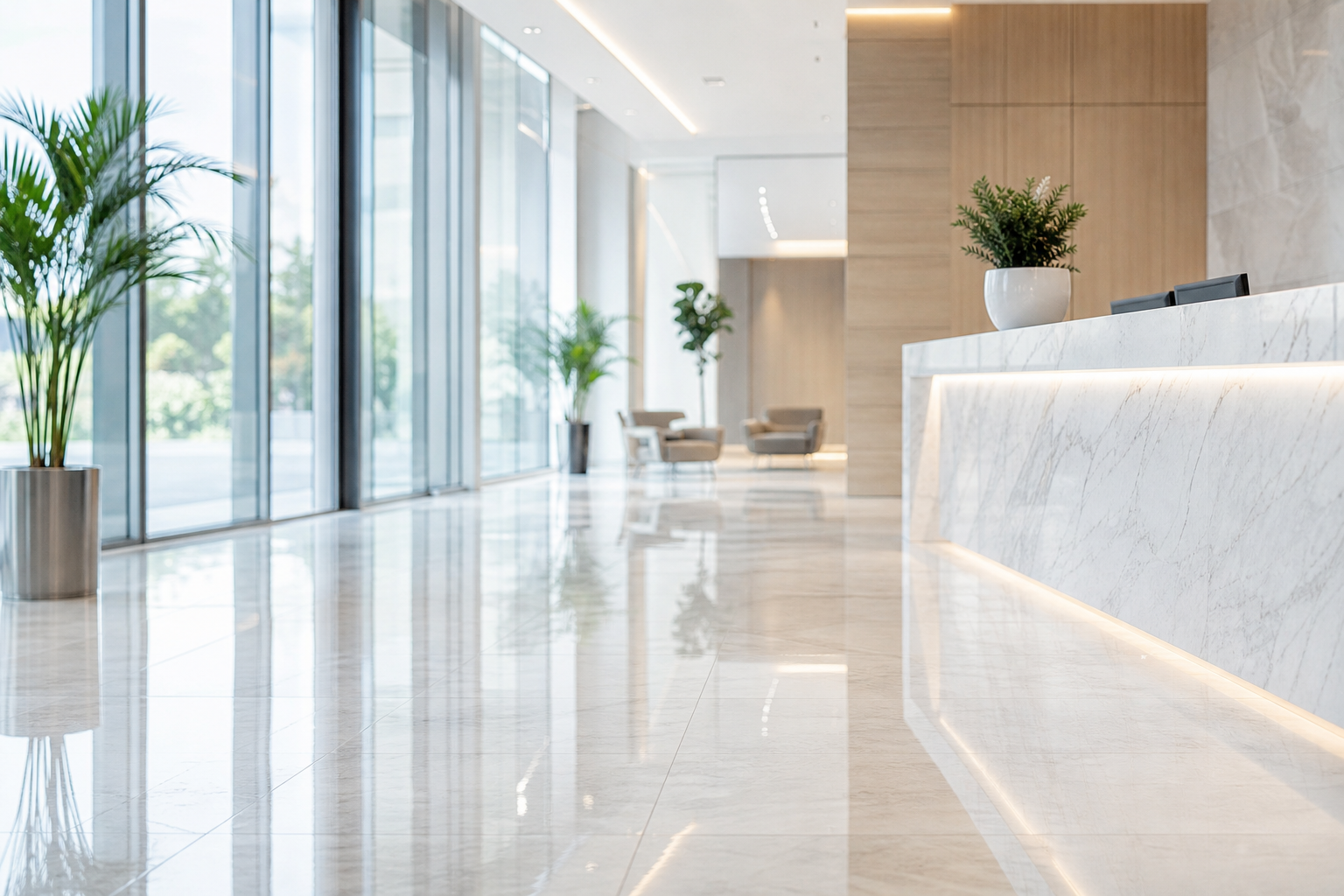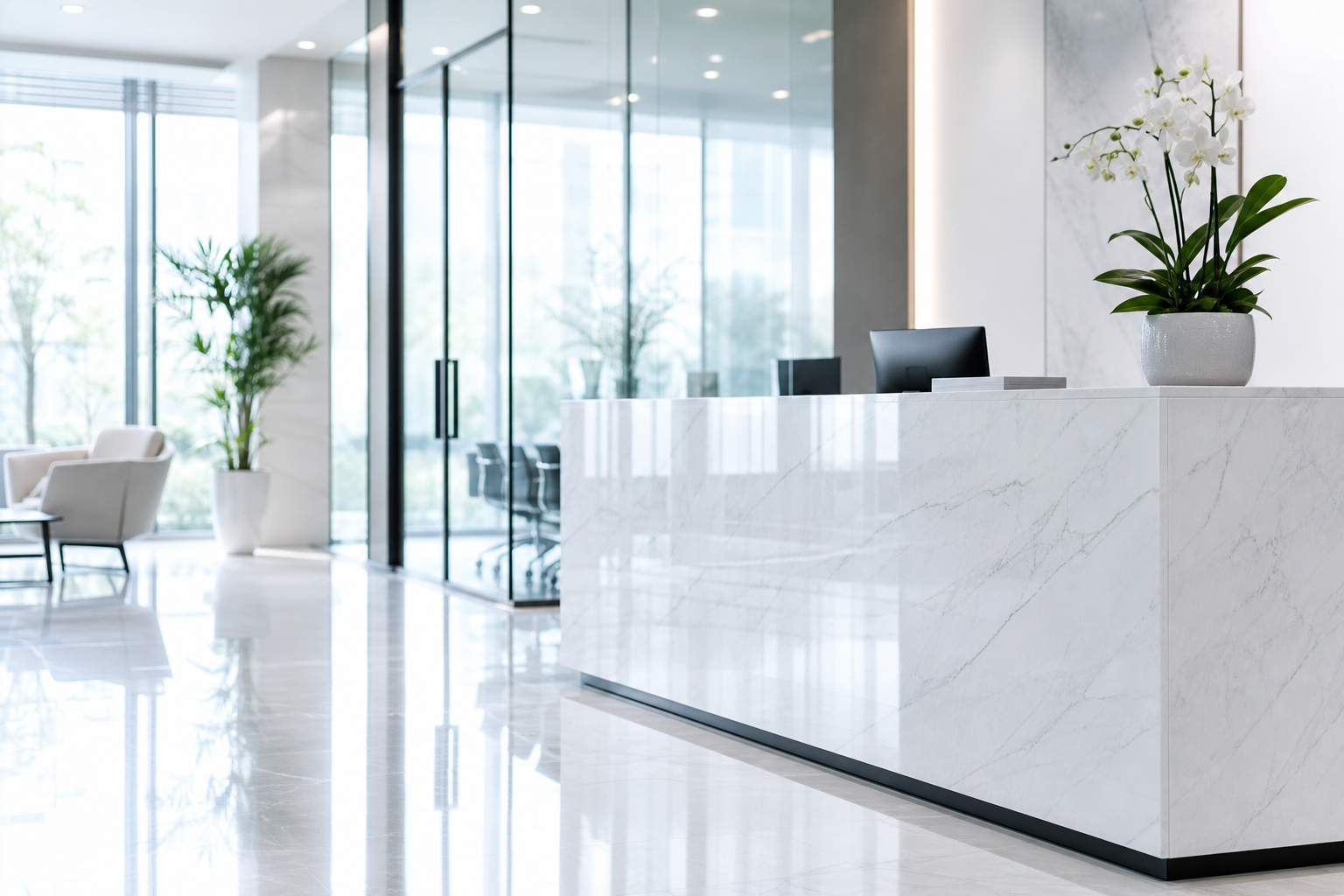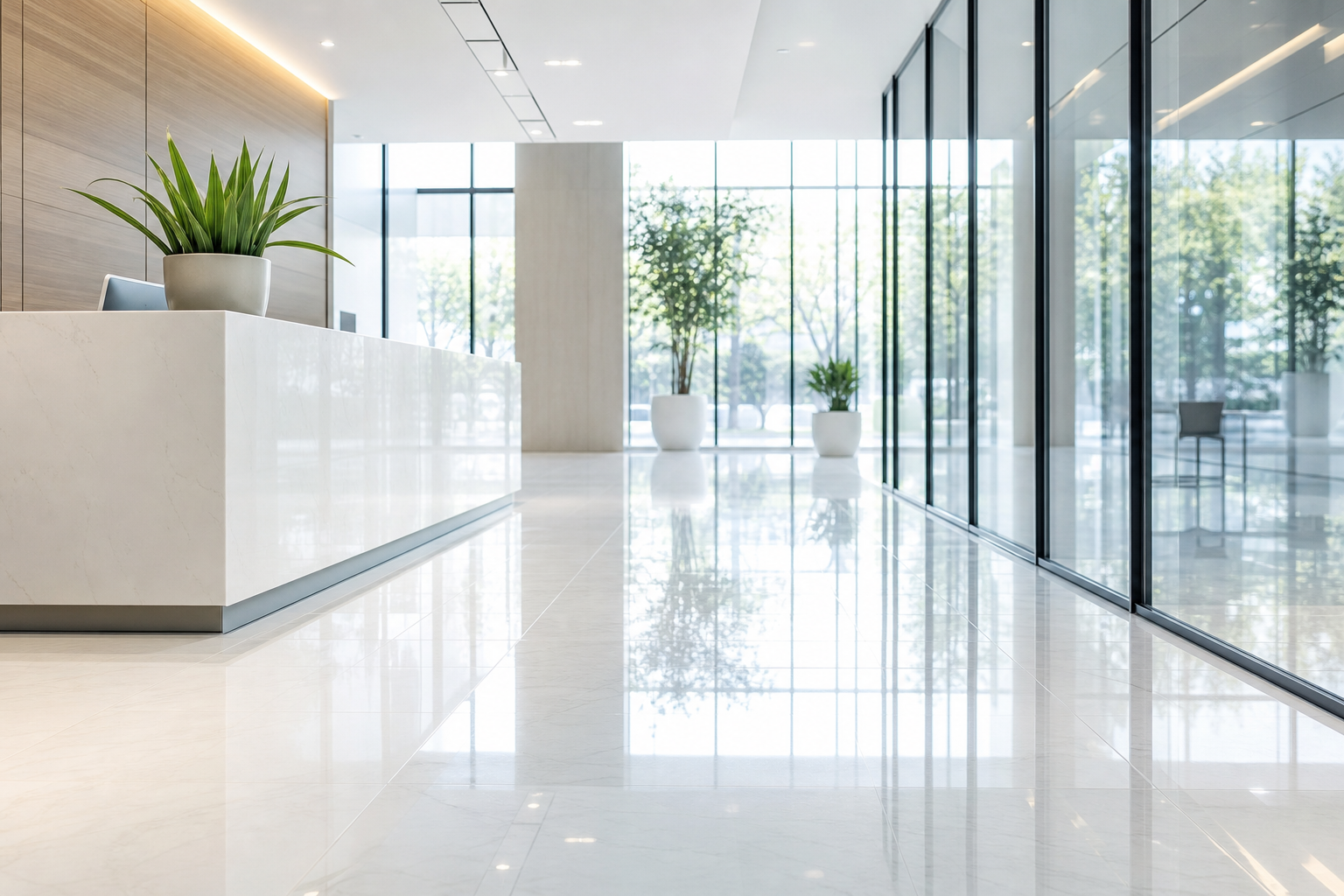
In an automotive dealership, your showroom floor is not just a surface—it’s a high-visibility selling tool that shapes first impressions before a salesperson ever says a word. Customers interpret shine, clarity, and cleanliness as signals of how you maintain your inventory, how detail-oriented your operation is, and whether your dealership is trustworthy.
The challenge is that showroom floors take constant abuse: foot traffic, road grit, salt residue, coffee spills, tire marks, and frequent vehicle moves. When floors lose gloss, show swirl patterns, or develop slippery spots, you’re not only risking brand perception—you’re increasing safety exposure and driving up long-term maintenance costs. A structured floor-care program delivers measurable ROI by protecting capital flooring assets, reducing slip-and-fall risk, and supporting higher customer confidence during the sales process.
The Psychology of Shine: How Floors Influence Buyer Confidence
Retail studies consistently show that store cleanliness affects purchase intent and brand trust, and dealerships function as premium retail environments. Visible soil, dull finish, or haze under LED showroom lighting can create a “cheap” visual effect that conflicts with vehicle pricing and brand positioning. Even minor defects—micro-scratches, embedded grit, or uneven gloss—are amplified by reflections from polished vehicle panels and overhead lighting, subtly reducing perceived quality across the entire space.
Actionable best practice is to treat the showroom floor as a “display surface” with defined appearance standards, not as a back-of-house maintenance item. That means adopting measurable targets (gloss consistency, soil load control, and finish clarity) and aligning cleaning frequency to traffic patterns, weather events, and vehicle movement schedules. When implemented correctly, consistent floor presentation reduces the need for reactive deep restoration and helps protect the manufacturer-grade aesthetic customers expect.
- Use high-filtration dust mopping and microfiber systems multiple times per day to remove abrasive grit before it scratches finishes.
- Implement a neutral-pH auto-scrub program (with the correct pad/brush and dilution control) to prevent haze and maintain uniform gloss.
- Deploy entry matting designed for soil capture (scraper + wiper zones) and maintain it daily to reduce tracked-in contaminants.
Risk, Liability, and Compliance: Floors Are a Safety System
Dealerships face real exposure from slip-and-fall incidents, particularly during wet weather, winter salt season, or when vehicle service traffic crosses customer pathways. OSHA requires employers to maintain walking-working surfaces “free of hazards” (29 CFR 1910 Subpart D), and inadequate housekeeping, wet floors, and poor traction management are common contributors to incidents. Beyond regulatory concerns, a single claim can carry significant direct and indirect costs—legal expenses, insurance impacts, staff time, and reputational damage.
Cost-efficient solutions focus on prevention: traction management, rapid spill response, and correct chemistry that avoids leaving slippery residues. Professional cleaning programs standardize procedures with documented frequencies, correct dwell times, and the right equipment (auto-scrubbers with proper squeegee recovery, low-foaming cleaners, and microfiber detailing for edges). This reduces incident risk while preserving appearance—two outcomes that directly support operational continuity and sales performance.
Protecting High-Cost Flooring Assets: A Practical ROI Model for Dealerships
Showroom floors—whether polished concrete, terrazzo, LVT, epoxy-coated systems, or high-gloss tile—represent a significant capital investment. The biggest cost driver over time is not routine cleaning; it’s premature wear caused by abrasive soil, incorrect pads, overly aggressive chemicals, or missed maintenance intervals that force expensive restoration (stripping, refinishing, honing, or recoating). Industry best practice aligns with ISSA guidance on planned maintenance: consistent daily soil removal and scheduled periodic restoration to extend lifecycle and stabilize annual costs.
A high-ROI approach is to move from “clean when it looks bad” to a documented floor-care plan with predictable labor, measurable outcomes, and fewer emergency call-outs. For example, maintaining a protective finish or guard (where appropriate) and performing periodic burnishing or polishing can extend the time between major restoration cycles—often the most disruptive and expensive events for a showroom. The operational takeaway is straightforward: investing in the right routine reduces total cost of ownership, keeps the floor camera-ready for walk-ins and digital marketing photos, and minimizes downtime during peak selling periods.
Conclusion
Your showroom floor is your dealership’s first sales pitch: it communicates quality, care, and professionalism instantly. When floors are consistently clean, glossy, and safe, they reinforce customer confidence, protect your facility investment, and reduce the operational drag of avoidable repairs and incident risk.
If you want a showroom that sells before your team even greets the customer, partner with a professional commercial cleaning service that can deliver a documented floor-care program, proper equipment and chemistry, and consistent results. The payoff is measurable—better first impressions, fewer safety exposures, longer floor life, and a cleaner, higher-performing dealership environment built for revenue.