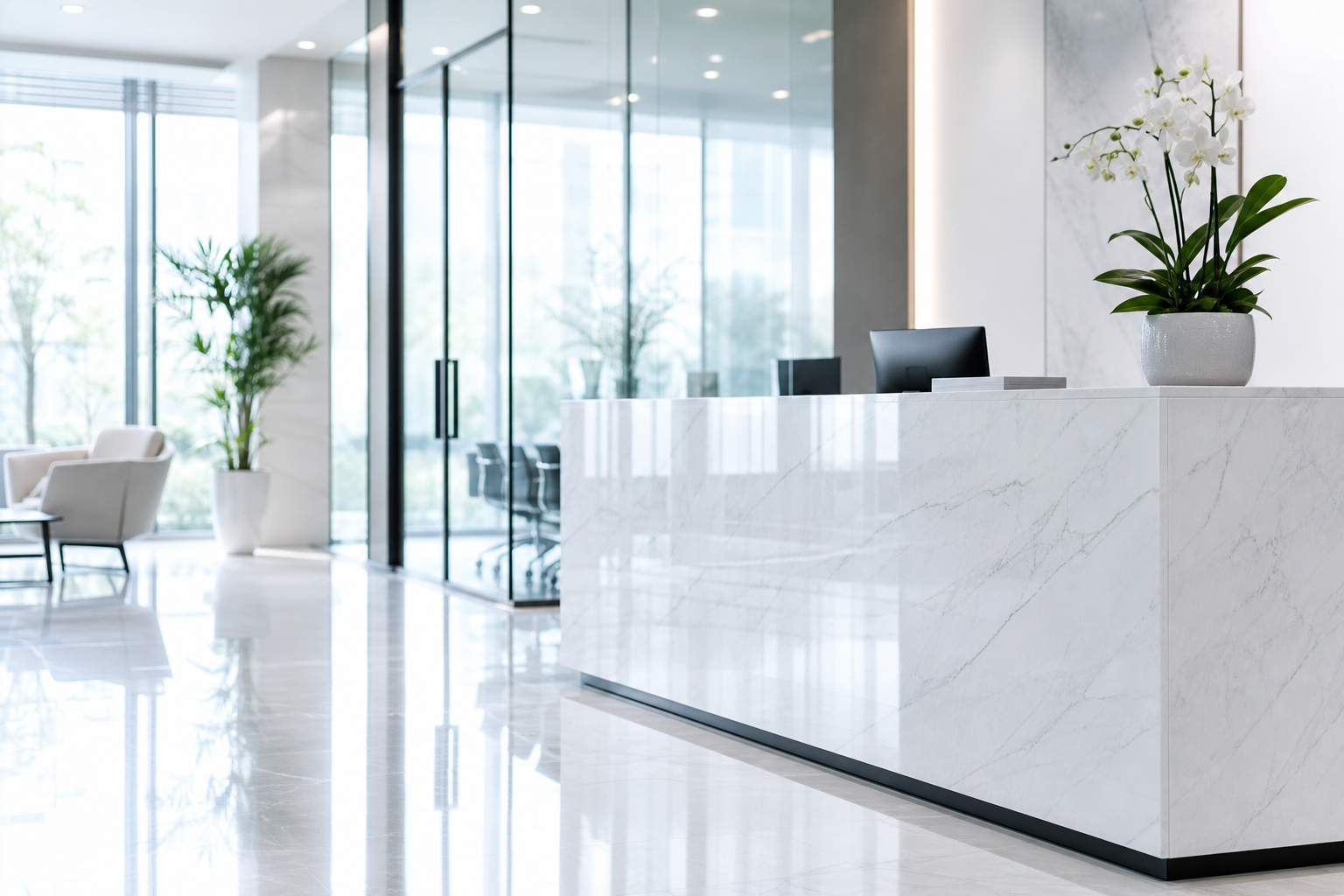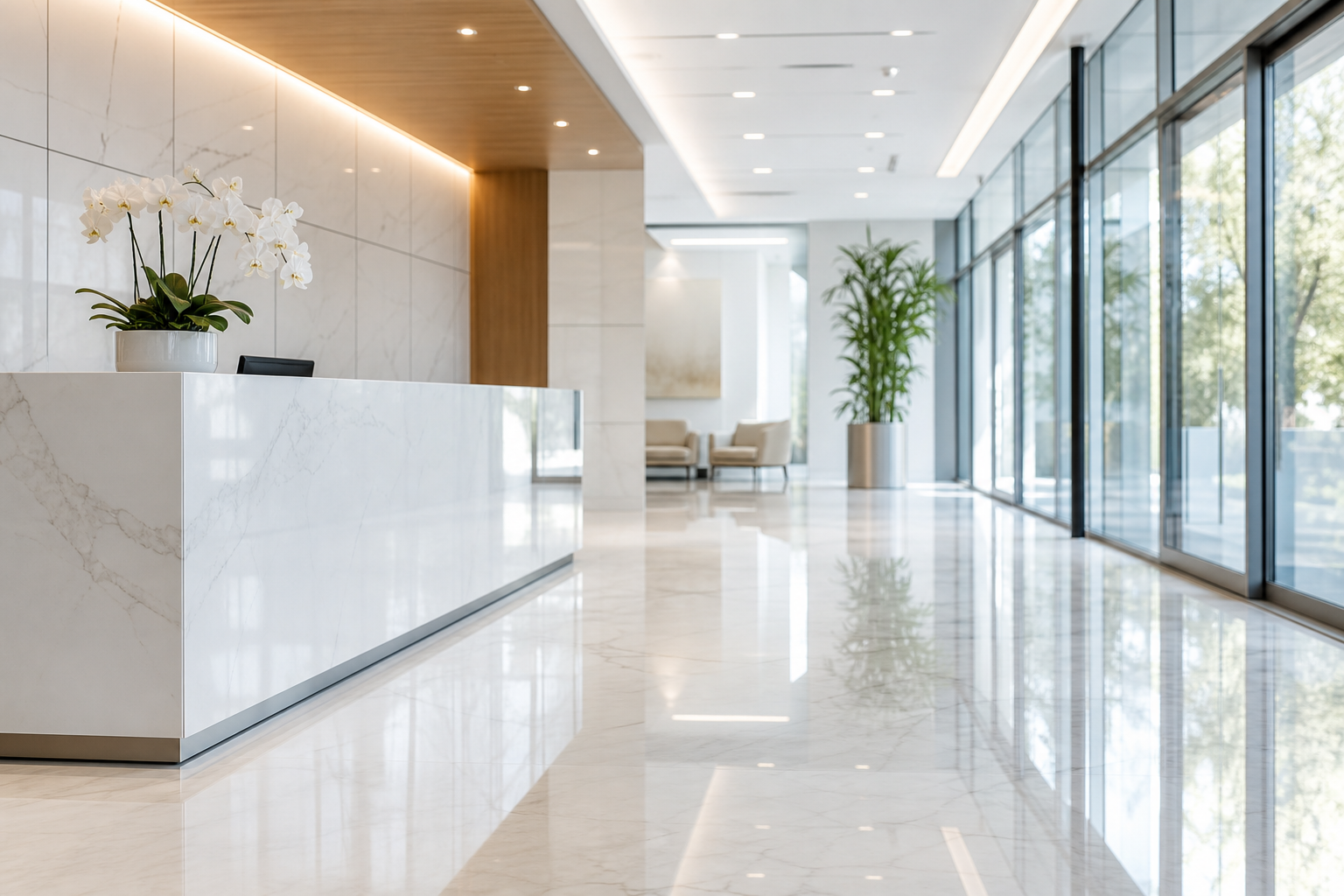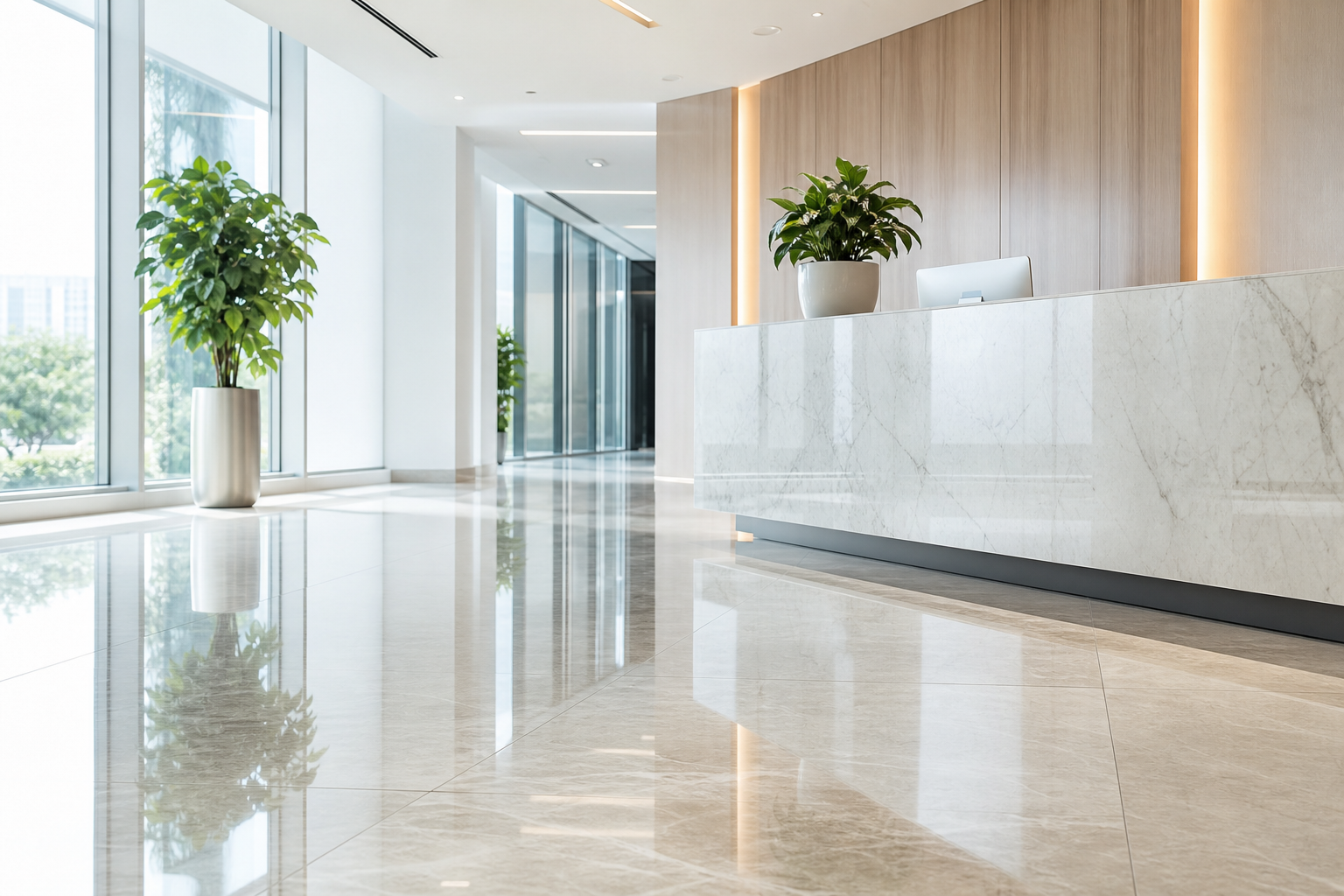
In an automotive dealership, the showroom floor is more than a surface—it’s a high-visibility selling tool that frames every vehicle, every interaction, and every first impression. Before a customer asks about financing or takes a test drive, they’ve already evaluated your environment for signals of trust, professionalism, and quality. Clean, glossy, well-maintained floors communicate operational excellence; scuffs, salt stains, hazy finish, and grime communicate neglect—and that perception can transfer directly to how shoppers judge your inventory and your brand.
Dealerships also face a unique cleaning ROI challenge: showroom floors endure constant abrasion from foot traffic, rolling tires, merchandising displays, winter de-icers, and frequent spot cleaning—often under intense lighting that magnifies every imperfection. When floors are not maintained on a planned cycle, costs spike through premature refinishing, increased labor hours for reactive cleaning, slip-and-fall exposure, and a diminished customer experience. A strategic floor care program turns a recurring expense into an asset that supports sales, reduces risk, and extends floor life.
First Impressions Happen Fast—Your Floor Sets the Tone
Research consistently shows that shoppers form first impressions within seconds, and environmental cues (cleanliness, brightness, and order) heavily influence perceived credibility. In a dealership showroom—where customers make high-value, high-emotion decisions—visual cleanliness matters. High-gloss finishes can enhance the perceived premium feel of vehicles and help lighting “pop,” while dull, dirty, or streaked floors reduce contrast and make the entire space feel tired. Even if your sales team performs flawlessly, a neglected floor can create friction by undermining customer confidence from the start.
The solution is not “more mopping”—it’s matching the right maintenance method to the flooring system (VCT, polished concrete, terrazzo, porcelain tile, epoxy, LVT) and the soil load typical to dealerships (tire rubber transfer, petroleum residues, road grit, and salt). Modern best practice is to build a proactive program that combines daily soil prevention, targeted spot response, and periodic restorative work. This approach reduces labor variability, protects the finish system, and keeps appearance consistent across peak traffic times—including weekends and sales events.
- Implement a soil containment strategy: high-performance entry matting (exterior scraper + interior wiper mats) and frequent mat vacuuming to reduce grit that abrades finishes.
- Use the correct chemistry and tools for tire and salt residues: neutral cleaners for daily use, approved degreasers for rubber marks, and controlled dilution to prevent hazing and film buildup.
- Schedule planned maintenance cycles: burnishing/auto-scrubbing cadence based on traffic, with periodic scrub-and-recoat or restorative cleaning to prevent costly full stripping or resurfacing.
Safety, Liability, and Compliance: Floors Are a Risk Management Priority
Slips, trips, and falls remain one of the most common workplace and public injury categories, and showroom floors can become hazardous when contamination (water, oil, de-icer residue) is combined with smooth finishes and high traffic. OSHA’s Walking-Working Surfaces requirements (29 CFR 1910 Subpart D) emphasize keeping floors clean, orderly, and in a condition that minimizes hazards. While OSHA does not “certify” a floor as slip-proof, it does expect employers to identify and control hazards—meaning your floor care program, inspection routines, spill response, and documentation matter.
From a cost-efficiency standpoint, structured floor maintenance reduces both incident risk and insurance exposure, while also lowering labor waste. A predictable daily and weekly plan (with clear responsibilities and response times) is typically less expensive than emergency spot fixes during business hours—especially when highly visible stains or dull lanes appear right before a promotion or manufacturer visit. Investing in professional-grade equipment (auto scrubbers with proper pad selection, burnishers, and dust control) and technician training also minimizes over-wetting and chemical misuse that can damage finishes and create slip hazards.
Protecting the Asset: Extending Floor Life and Maximizing ROI
Showroom flooring is a capital asset with a lifecycle cost—not just an aesthetic feature. Abrasive soil acts like sandpaper, accelerating wear and dulling. Overuse of harsh chemicals or improper pads can strip protective coatings prematurely, increasing the frequency of expensive restoration. A well-designed program focuses on “appearance retention” and “finish preservation,” typically delivering ROI through reduced refinishing frequency, fewer disruption hours, and longer replacement timelines. Many facilities see meaningful savings when they shift from reactive deep cleans to planned maintenance, because consistent light-to-moderate cleaning is cheaper than periodic heavy restoration.
Operationally, the best-performing dealerships treat floor care like preventative maintenance: define floor types and zones, set measurable appearance standards, and align work with customer traffic patterns (after-hours restorative work, early-morning detailing, and rapid daytime spot response). Modern technologies—such as low-moisture scrubbers, diamond polishing systems for concrete/terrazzo, and high-filtration vacuums—can improve appearance while controlling dust and reducing downtime. The result is a showroom that consistently looks “sales-ready” without the hidden costs of frequent rework, shortened coating life, and avoidable safety events.
Conclusion
Your showroom floor is your dealership’s first sales pitch because it shapes perception instantly, reinforces brand quality, and signals operational discipline. When floors are maintained with a proactive, standards-based program, you gain more than shine—you reduce liability, improve customer confidence, protect your investment in the facility, and create a consistent environment where vehicles look their best every day.
If you want a showroom that stays “grand-opening clean” without disrupting sales, partner with a professional commercial cleaning team that understands dealership traffic, tire and salt contamination, floor finish systems, and OSHA-aligned risk control. A specialized provider can build a cost-effective maintenance schedule, use the right equipment and chemistry for your floor type, and deliver measurable ROI through longer floor life, fewer emergencies, and a consistently premium customer experience—turning your floors into a quiet but powerful driver of revenue.