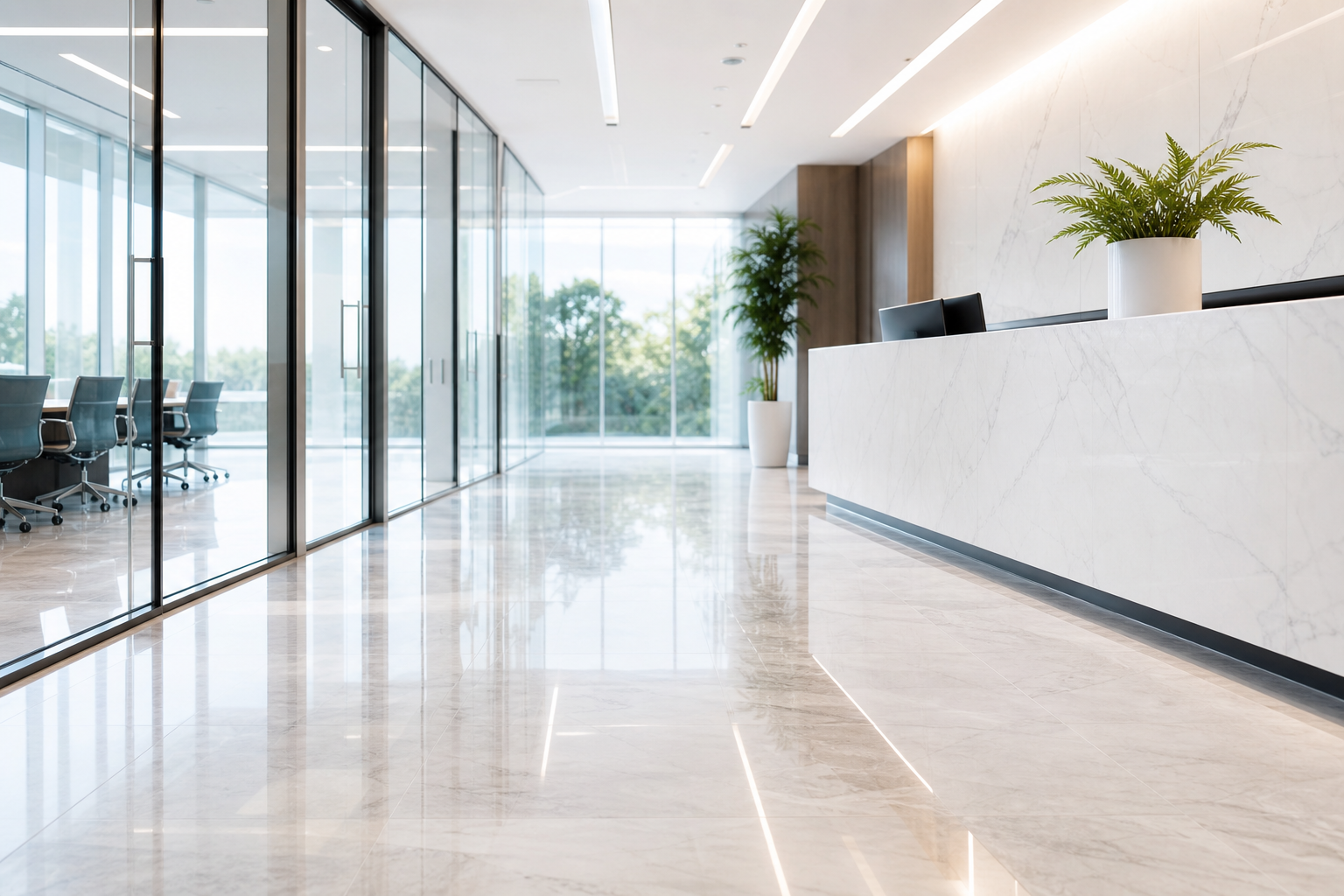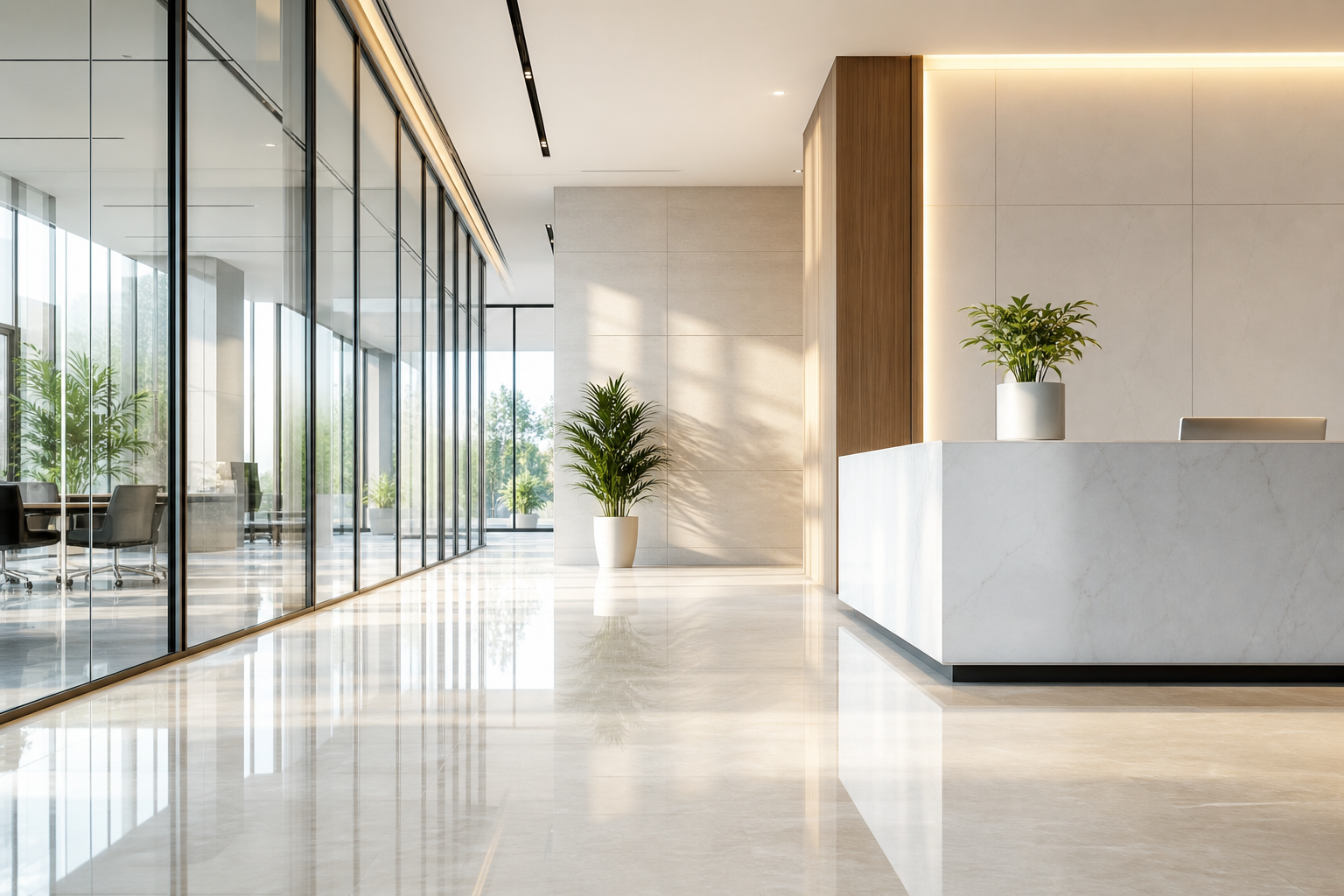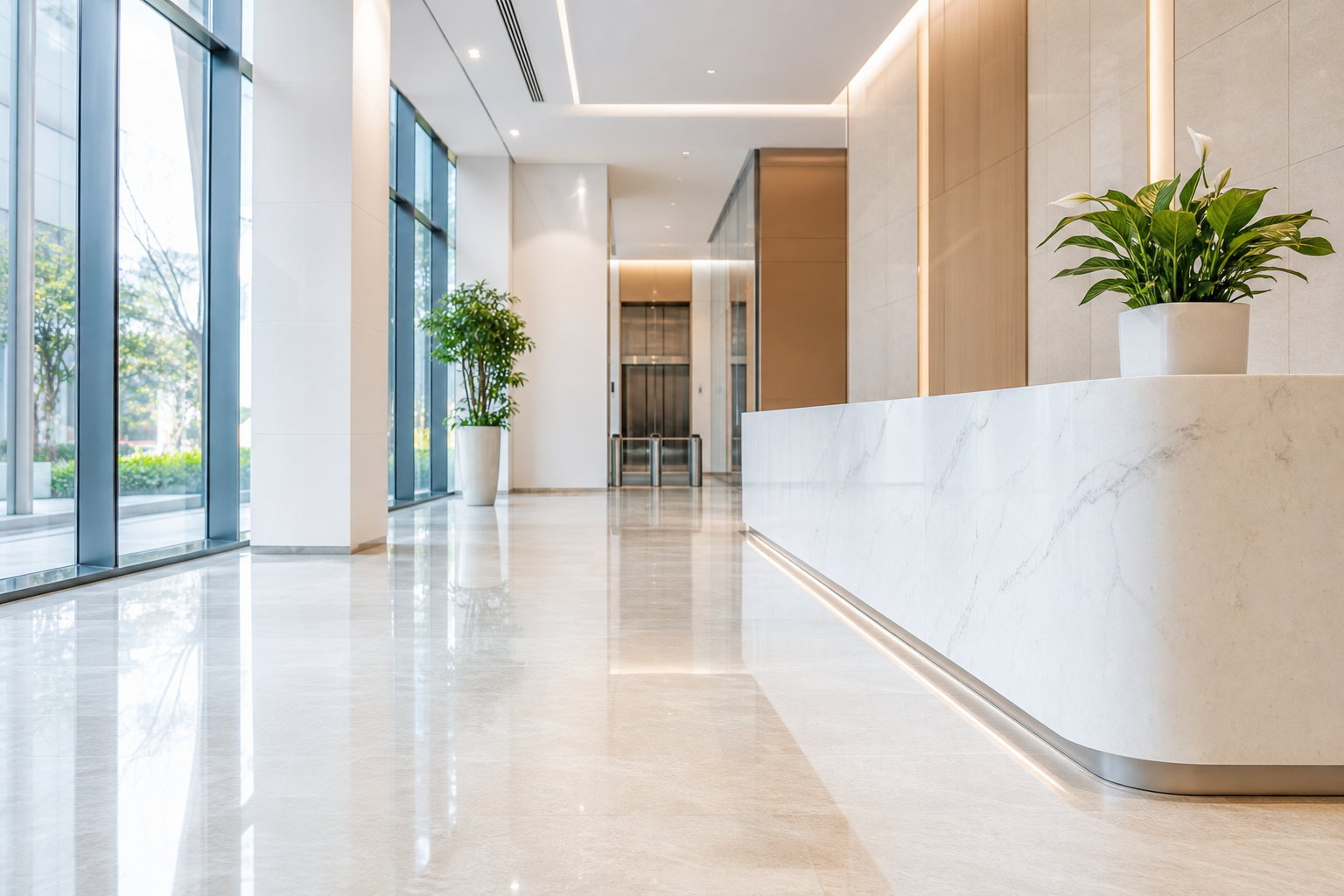
A dealership showroom is engineered to sell before a sales consultant ever says hello—and your floors are doing more of that work than most operators realize. The floor is the largest continuous surface in the customer’s field of view, and it directly influences perceived vehicle quality, brand trust, and the “premium” feel that supports higher gross. In retail psychology terms, shoppers use environmental cues to reduce uncertainty; in a dealership, the shine, clarity, and cleanliness of the showroom floor become a fast, subconscious signal of how you run the business.
The operational challenge is that showroom floors take constant abuse: foot traffic, rolling loads, rubber transfer, winter salt, oils, tire dressings, beverage spills, and dust from service drive-throughs. Left unmanaged, small defects—haze, swirl marks, grout discoloration, edge build-up, and slippery residue—compound into higher labor, higher slip-and-fall exposure, and a showroom that silently undermines closing ratios. The ROI case is straightforward: protecting the floor’s finish and safety profile reduces long-term restoration costs, supports better customer experience metrics, and prevents incidents that can produce outsized claim costs.
Customer Perception: Floors Set the “Quality Bar” in the First 10 Seconds
First impressions happen immediately, and facilities are a major component of that judgment. Research commonly cited in facility and retail operations shows visitors form rapid opinions about cleanliness and professionalism within seconds of entering a space, and those impressions are difficult to reverse during the visit. In a dealership environment—where customers may already be skeptical of pricing and process—any sign of neglect (dull lanes, black heel marks, sticky tile, dusty corners) adds friction to the buying decision and increases the likelihood of “shopping one more store.”
Showroom floors also influence how vehicles photograph and present under high-CRI lighting. Gloss variation, residue haze, and uneven reflection can make paint finishes look less crisp—particularly on dark vehicles—reducing the perceived difference between trim levels. The operational fix is to treat the showroom floor like a merchandising surface: maintain consistent gloss, eliminate traffic-lane graying, and control contaminant migration from service bays and exterior entry points with a planned program, not reactive spot cleaning.
- Implement a “front door to floor” soil-control system (scraper mat outside, wiper mat inside) sized to capture moisture/soil; industry best practice is to cover enough walking distance to remove a meaningful percentage of tracked-in contaminants.
- Use a documented daily plan: dust mop/microfiber flat mop for particulates, spot-clean rubber transfer promptly, and clean edges/corners where build-up signals neglect.
- Standardize periodic machine cleaning and finish maintenance (auto-scrub with correct pad/brush, controlled chemical dilution, and scheduled burnishing or polishing where appropriate) to prevent haze and traffic-lane wear.
Risk Management: Slip-and-Fall Exposure, Chemical Residue, and Compliance
Shiny is not the same as safe. High-gloss floors that retain detergent film, tire dressing, or improperly applied finish can become slick—especially near entrances, beverage stations, and vehicle display turntables. OSHA’s Walking-Working Surfaces requirements (29 CFR 1910 Subpart D) obligate employers to keep walking surfaces clean, orderly, and in a sanitary condition, and to address hazards such as wet or slippery surfaces. In addition, many facility managers align programs with ANSI/NFSI B101 standards to improve slip resistance measurement and management practices, particularly in customer-facing retail environments.
The cost side matters: a single slip-and-fall can generate direct costs (claims, legal fees, higher premiums) and indirect costs (staff time, reputational damage, lost sales). The most cost-efficient approach is preventive: remove contaminants quickly, verify that the cleaning chemistry is compatible with the floor type and finish, and use methods that clean without leaving residue. Professional programs also incorporate documentation—work orders, incident response procedures, and inspection logs—that can be invaluable in demonstrating due diligence.
Protecting the Asset: Floor Type, Correct Methods, and Lifecycle ROI
Showrooms commonly use polished concrete, porcelain/ceramic tile, VCT/LVT, terrazzo, or epoxy systems—each with different maintenance requirements and failure modes. Polished concrete can lose clarity due to improper pads, aggressive chemicals, or micro-scratching that increases light scatter. Tile and grout can discolor from oils and road salts, and aggressive degreasers can degrade grout sealers over time. VCT and some coated systems depend on finish integrity; if traffic lanes are allowed to wear through, you’ll face frequent scrub-and-recoat cycles or full strip-and-wax—both disruptive and labor-intensive. Across all surfaces, incorrect dilution (too strong or too weak), wrong pad selection, and inadequate rinse/water recovery are the most common root causes of dullness and residue.
Lifecycle ROI comes from aligning the cleaning method to the surface and the soil load, then scheduling maintenance before the floor “fails.” A well-managed program reduces periodic restoration frequency, extends coating/finish life, and minimizes downtime during peak sales hours. It also improves labor productivity: when the floor is maintained consistently, daily tasks are faster and less chemical-intensive. In practical terms, dealerships that move from reactive restoration to a planned maintenance model typically see fewer emergency call-outs, more predictable budgeting, and a showroom that consistently supports merchandising and brand standards.
Conclusion
Your showroom floor is a silent salesperson: it signals quality, influences how vehicles present under lighting, and either supports or undermines customer confidence in your operation. When floors are maintained as a strategic asset—clean, consistent, and slip-conscious—you reduce risk, protect the surface lifecycle, and create an environment that helps your team close.
If you want your facility to sell as hard as your sales staff, partner with a professional commercial cleaning team that understands dealership traffic patterns, floor system requirements, and measurable safety practices. A structured program—daily detailing, scheduled machine maintenance, and periodic restoration—delivers predictable costs, fewer disruptions, reduced liability exposure, and a showroom presentation that protects margins and strengthens customer trust. Contact a qualified commercial cleaning provider to audit your showroom floors and build a maintenance plan that pays for itself in appearance, safety, and long-term floor preservation.