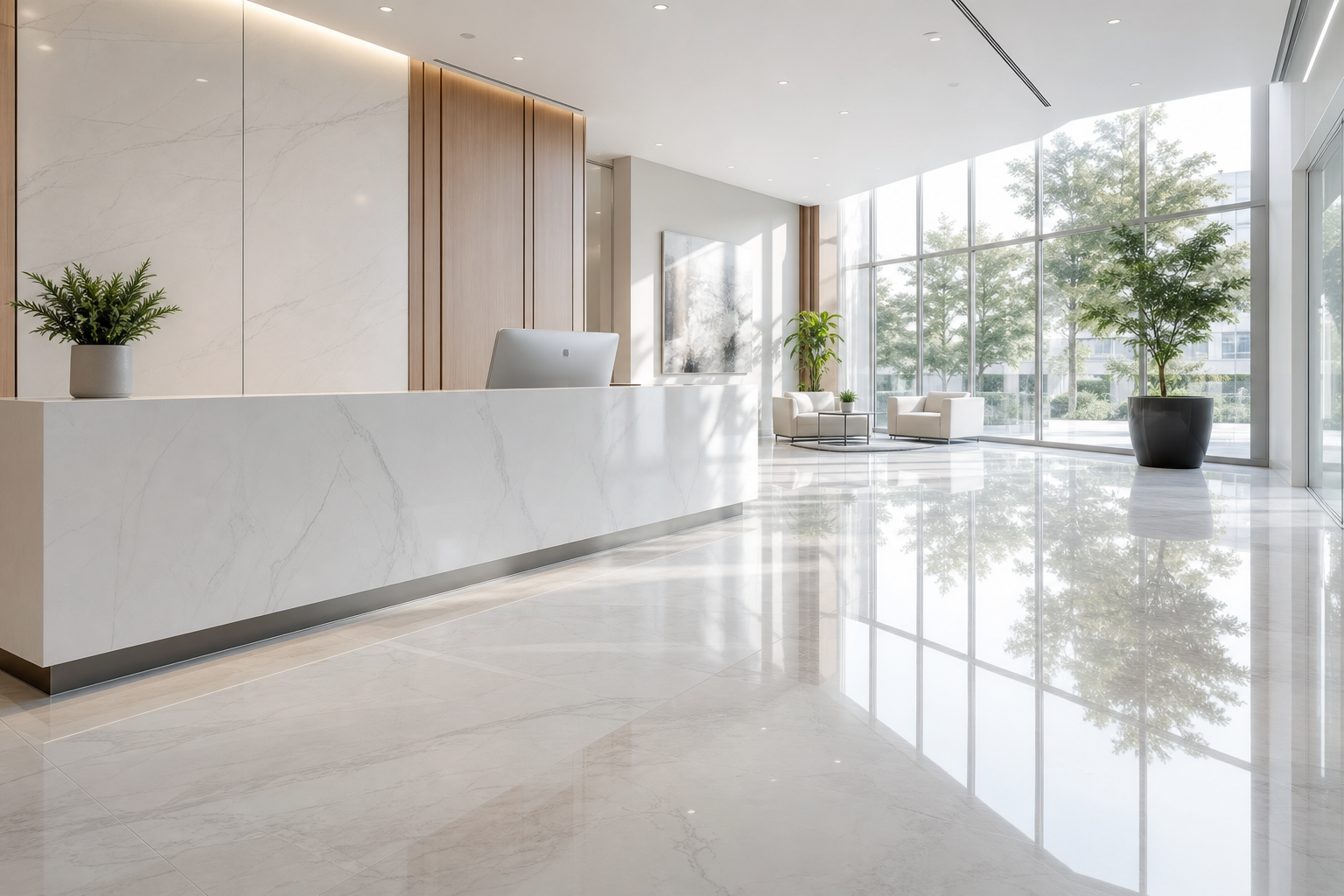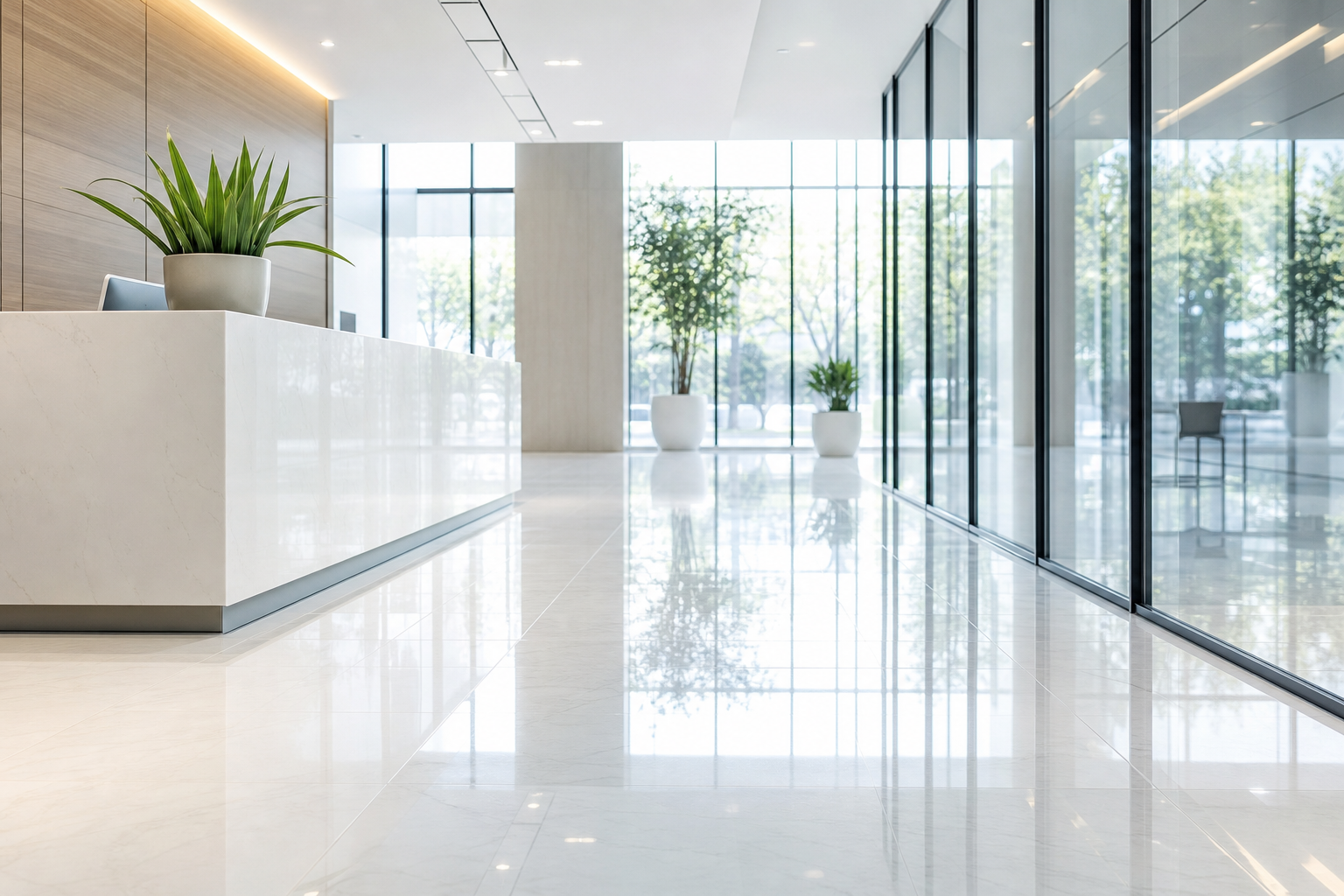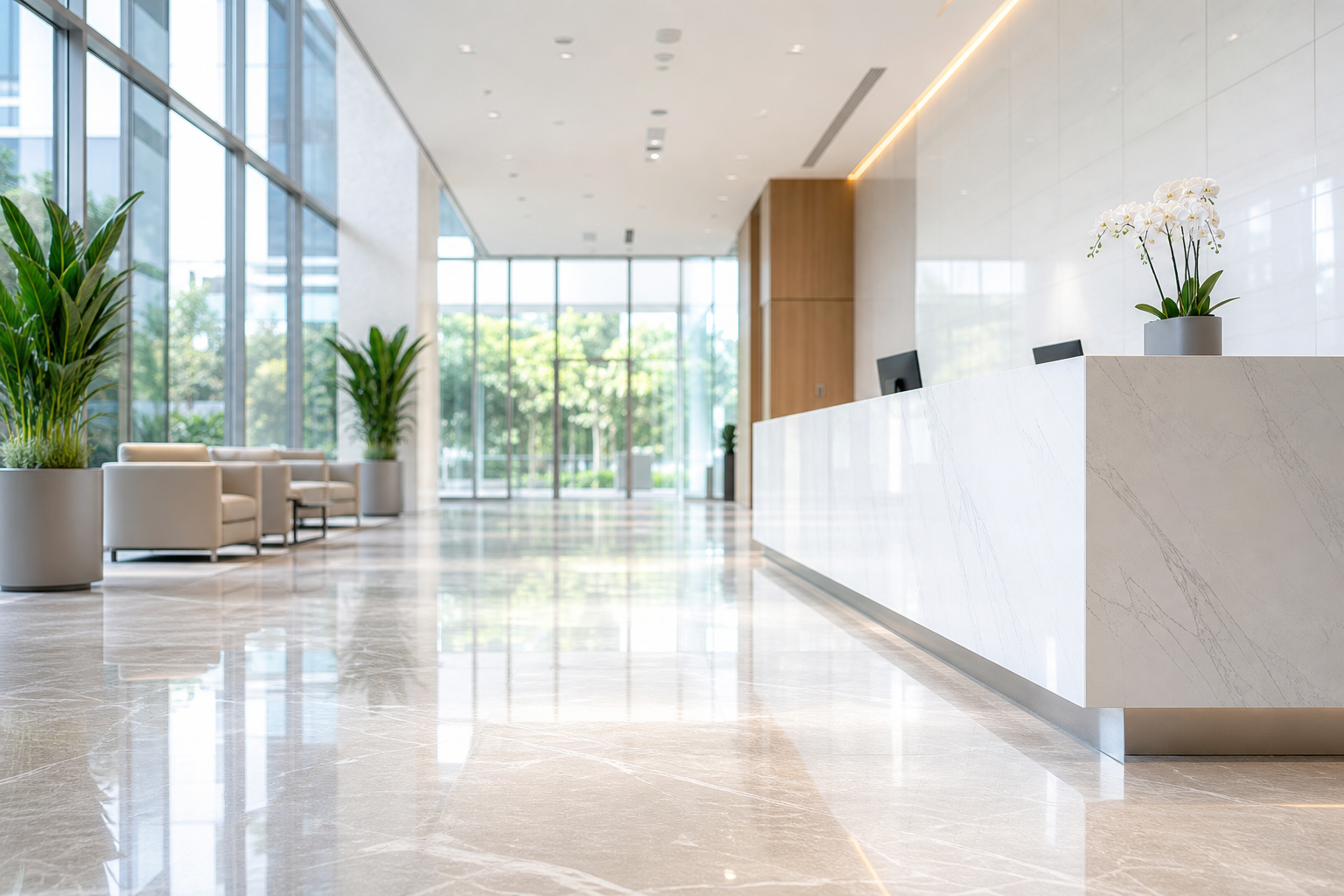
In automotive retail, your showroom floor speaks before your sales team does. The condition of that surface—its gloss level, cleanliness, traction, and overall presentation—sets the tone for perceived vehicle quality, brand professionalism, and customer trust the moment a prospect walks in.
Dealerships invest heavily in inventory, lighting, signage, and digital marketing, yet many overlook the highest-traffic “sales asset” in the building: the floor. When floors are dull, streaked, or visibly worn, it silently undermines your positioning and can shorten customer dwell time—while also increasing slip-and-fall exposure and accelerating costly surface replacement. A disciplined, professional floor care program is one of the most measurable, ROI-positive facility upgrades a dealership can make.
First Impressions, Brand Perception, and the “Halo Effect” of Clean Floors
Customers form judgments quickly, and environmental cues heavily influence those judgments. Research in consumer psychology consistently shows that cleanliness and order elevate perceptions of quality and competence—what marketers call the “halo effect.” In a dealership, a high-gloss, spotless floor reinforces premium positioning, supports higher confidence in pricing, and reduces the subconscious friction that can derail a purchase decision.
Actionably, this means shifting floor care from “as needed” to “engineered.” The objective is not just to remove visible soil, but to control fine particulates (tracked-in grit that scratches finishes), eliminate film build-up that causes hazing, and maintain consistent reflectance under showroom lighting. Proper daily maintenance paired with scheduled restorative services protects appearance while preventing irreversible wear patterns that make even new vehicles look less impressive.
- Implement a daily dust-mopping and auto-scrubbing plan (based on traffic) to remove abrasive grit before it micro-scratches coatings and tile.
- Use entrance matting systems sized to capture debris and moisture (a practical target is 10–15 feet of matting coverage across primary entrances) to reduce soil load and slip risk.
- Schedule periodic burnishing, deep scrubbing, or refinishing based on flooring type (VCT, polished concrete, epoxy, porcelain) to keep gloss consistent and prevent premature replacement.
Safety, Liability, and Compliance: Clean Floors Reduce Risk
Showroom floors are inherently high-risk due to a mix of foot traffic, wet-weather tracking, and hard, smooth surfaces. Slip-and-fall incidents remain one of the most expensive categories of premises claims for retail environments. From a compliance standpoint, OSHA’s Walking-Working Surfaces requirements (29 CFR 1910 Subpart D) place responsibility on employers to keep walking surfaces clean, orderly, and in a sanitary condition, including addressing hazards like wet floors, contamination, and inadequate maintenance.
A professional cleaning program improves safety outcomes while controlling costs. Consistent removal of oils, tire residue, and tracked-in moisture reduces the coefficient-of-friction variability that contributes to slips. Clear procedures—wet floor signage, rapid response protocols, and correct chemical selection—also minimize accidental damage to floor finishes (a common hidden cost) and reduce downtime from emergency remediation.
The Real ROI: Extending Floor Life, Lowering Total Cost of Ownership, and Supporting Sales
Flooring is a capital asset with a predictable life cycle, and the fastest way to shorten that life is inconsistent maintenance. Abrasive soil behaves like sandpaper; when it isn’t removed frequently, it degrades finishes and surface integrity, leading to more frequent stripping, re-coating, polishing, or even replacement. Professional floor care aligns with widely adopted industry frameworks such as ISSA’s Cleaning Industry Management Standard (CIMS), which emphasizes documented processes, quality systems, and continuous improvement—key ingredients for predictable facility costs.
From an operational standpoint, the ROI comes from three levers: reduced restorative frequency (less stripping/refinishing), fewer repairs and replacements, and improved customer experience. With the right schedule and methods—such as low-moisture maintenance where appropriate, auto-scrubbers with HEPA filtration for dust control, burnishing programs for VCT, and properly specified cleaners for polished concrete—dealerships can maintain showroom-grade appearance with fewer disruptive “big clean” events. The result is a cleaner, safer sales environment with a lower total cost of ownership over the floor’s lifespan.
Conclusion
Your showroom floor is not a background detail—it is a front-line sales tool, a brand signal, and a safety variable. When it is consistently clean, glossy (where appropriate), and well-maintained, it elevates vehicle presentation, improves customer confidence, reduces slip risk, and protects one of your facility’s most expensive surfaces from premature wear.
If you want a showroom that sells before your team says a word, partner with a professional commercial cleaning provider that can engineer a floor care program around your traffic patterns, flooring type, and dealership hours. The payoff is measurable: longer floor life, fewer liability exposures, improved customer experience, and a consistently premium look that supports every sale.