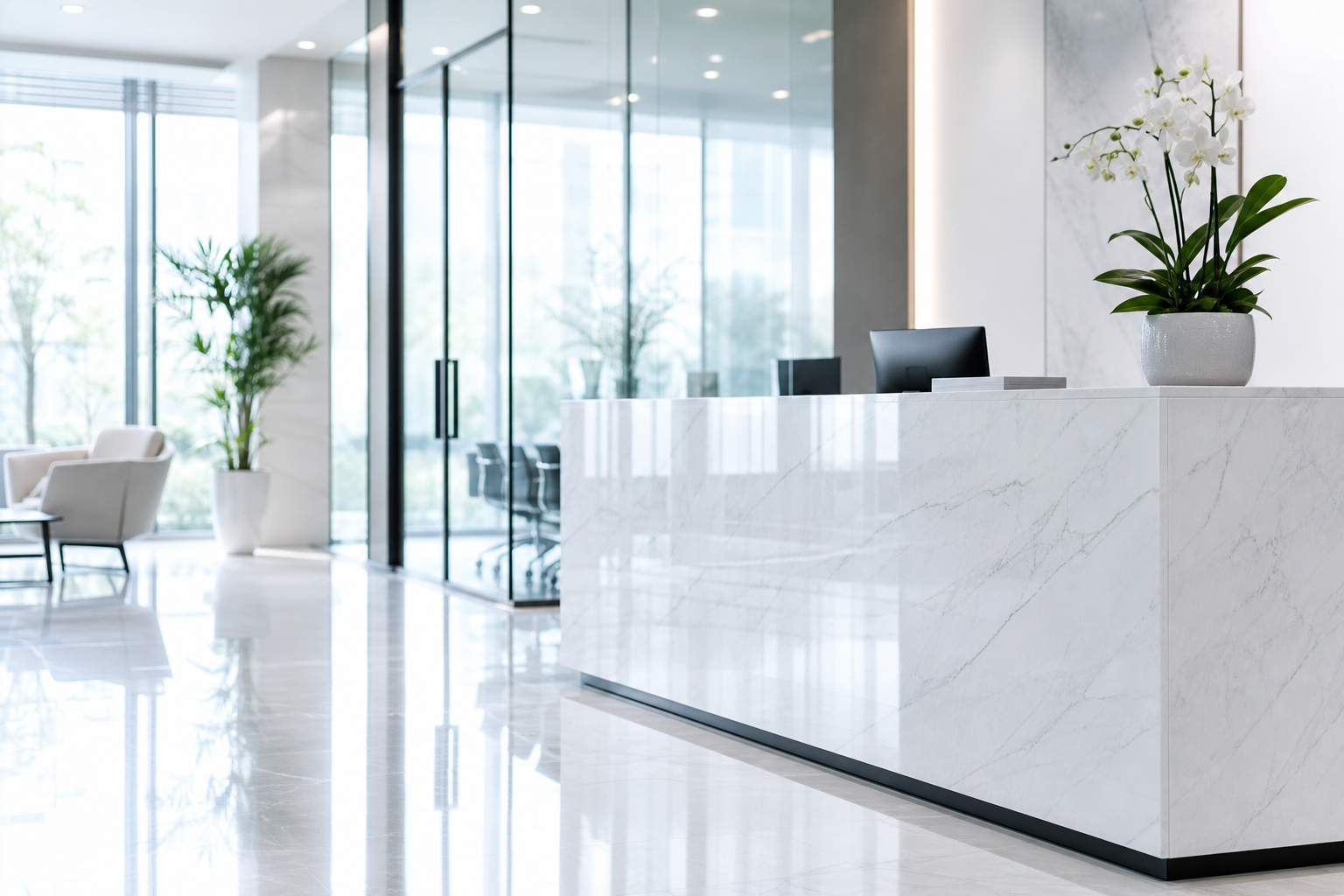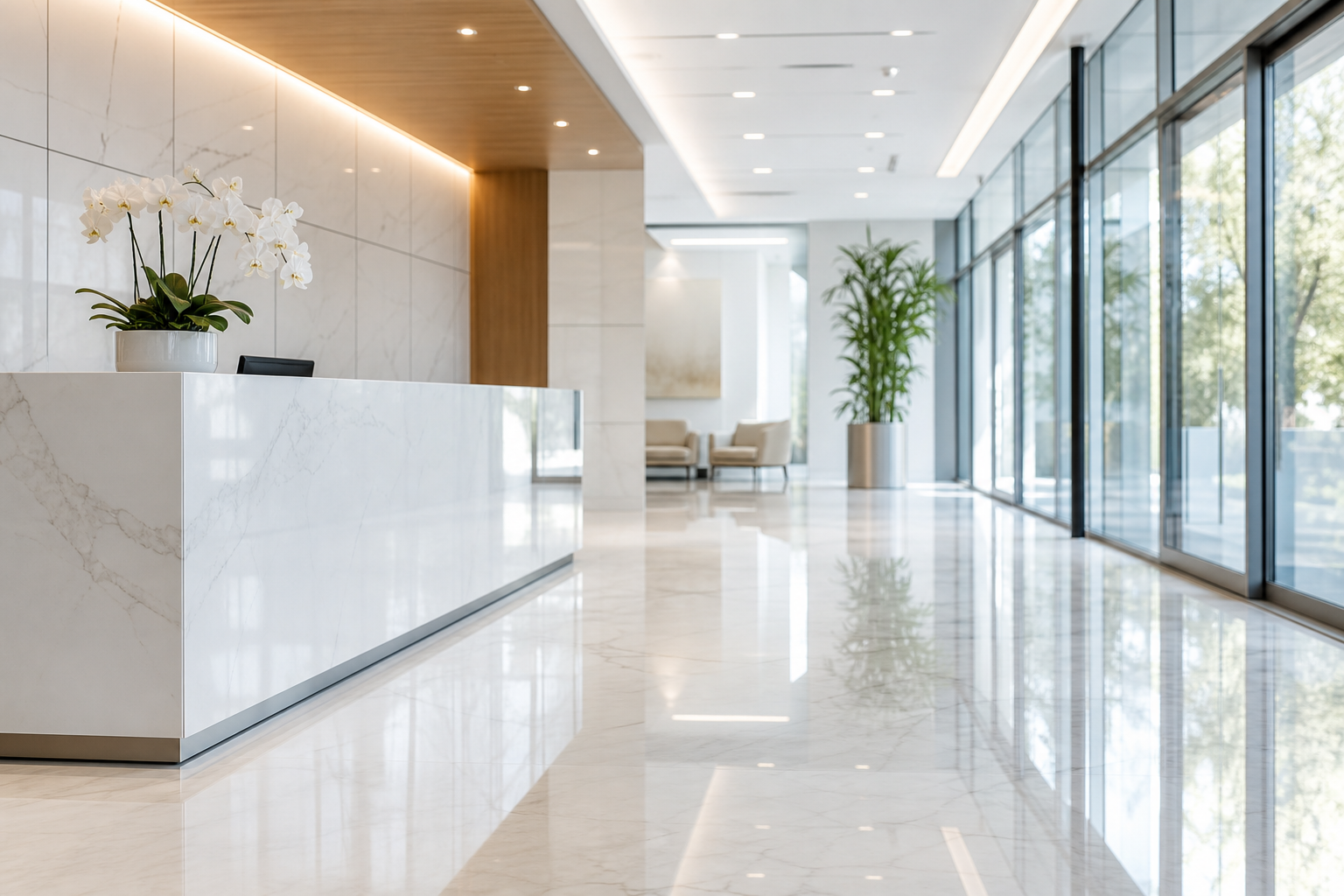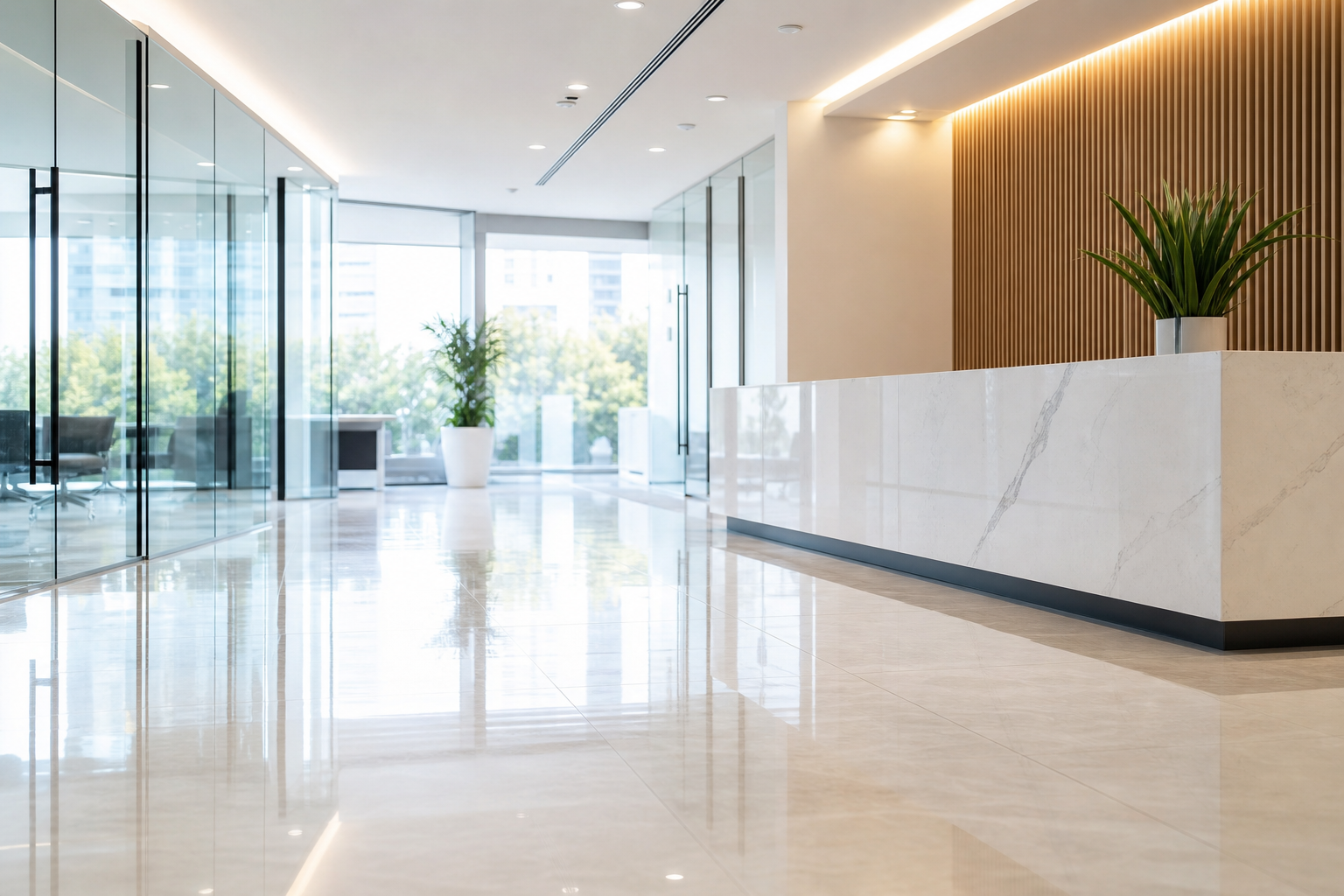
In automotive retail, customers evaluate your dealership long before they speak with a sales associate—and your showroom floor is one of the most influential “silent salespeople” in the building. High-gloss concrete, polished terrazzo, luxury vinyl tile (LVT), and epoxy systems all telegraph brand quality, operational discipline, and trustworthiness within seconds of a prospect walking in.
What many dealers underestimate is the direct ROI tied to floor appearance and performance: dull finish, tracked-in soils, slip hazards, and visible staining can erode confidence, reduce dwell time, and create costly safety and maintenance liabilities. The good news is that floor care is measurable and manageable—when it’s treated as a facility asset with a clear standard, documented process, and the right equipment and chemistry.
First Impressions Convert: How Floors Influence Customer Perception and Behavior
Showrooms are designed for high-value decision-making, and the floor is the largest continuous surface customers see. Visible grit at entries, hazing from improper neutralization, tire scuffing near display vehicles, and inconsistent gloss levels all signal neglect—even when the rest of the dealership looks “clean enough.” In service-driven retail environments, perceived cleanliness is strongly associated with perceived competence and professionalism, and that perception impacts whether customers feel confident doing business in your facility.
From an operational standpoint, the floor is also where traffic patterns concentrate: entry vestibules, finance offices, restrooms, customer lounges, and high-touch vehicle walkarounds. A targeted floor-care program that prioritizes these zones improves presentation while controlling labor and chemical spend—especially when you match frequency to soil load and use the right tools (e.g., microfiber flat mops for daily dust control, auto-scrubbers for routine maintenance, and burnishers where appropriate).
- Establish a “first 30 feet” standard: prioritize entry mats, vestibules, and immediate showroom lanes where first impressions form fastest.
- Use daily dry soil removal to prevent micro-abrasion: dust mopping and vacuuming with HEPA filtration reduces grit that dulls finish and accelerates wear.
- Align cleaning frequency to traffic, not the calendar: measure soil load and adjust scrub/burnish schedules to maintain consistent gloss and reduce restoration events.
Safety and Liability: Slip Resistance, Soil Control, and Regulatory Expectations
Beyond aesthetics, showroom floors are a risk-management issue. Slip-and-fall incidents remain a leading cause of workplace injury and liability exposure across facilities. Wet weather tracking, oily residues near service interfaces, and over-applied finish can all reduce traction. While slip resistance is influenced by flooring type and finish selection, it is heavily affected by maintenance quality—especially correct dilution, dwell time, rinse recovery, and immediate spill response.
Dealerships also operate under a range of safety expectations that make disciplined floor care non-negotiable. OSHA’s Walking-Working Surfaces requirements (29 CFR 1910 Subpart D) obligate employers to keep walking surfaces clean, orderly, and in a sanitary condition, and to address hazards such as slippery conditions. A professional program that includes documented procedures, proper signage, and trained technicians reduces incident probability and provides defensible compliance practices—often at far lower cost than a single claim, premium increase, or reputational hit.
Protecting the Asset: Matching Floor Type, Chemistry, and Equipment for Maximum ROI
Showroom floors fail early when maintenance methods don’t match the material. For example, aggressive pads on polished concrete can create uneven sheen; alkaline degreasers can damage certain finishes if misused; and inadequate rinse recovery can leave residue that attracts soil and causes rapid re-soiling. The result is “cleaning more but looking worse,” which drives up labor hours and pushes you into expensive restorative work like stripping and refinishing, resurfacing, or recoating.
The highest ROI approach is lifecycle floor care: prevent abrasion, remove bonded soils efficiently, and restore appearance with the least disruptive methods. That means specifying the correct neutral cleaners, pad types, and machine settings; controlling water usage; and using burnishing or top-scrubbing only when the floor system benefits from it. Done correctly, proactive maintenance extends coating life, reduces after-hours disruption, and stabilizes your monthly facility budget by avoiding unpredictable capital hits.
Conclusion
Your showroom floor is not just something customers walk on—it’s a high-visibility sales tool, a safety surface, and a long-term facility asset. Consistent gloss, clean edges and corners, controlled entry soil, and properly maintained finishes reinforce brand confidence, reduce liability risk, and lower total cost of ownership by preventing premature wear and expensive restoration.
If you want your dealership to look “delivery-ready” every day while protecting your flooring investment, partner with a professional commercial cleaning team that understands automotive environments, floor system specifications, and measurable performance standards. A disciplined, data-informed floor care program will improve customer perception, reduce risk, and deliver real ROI—turning your showroom floor into your strongest first sales pitch.