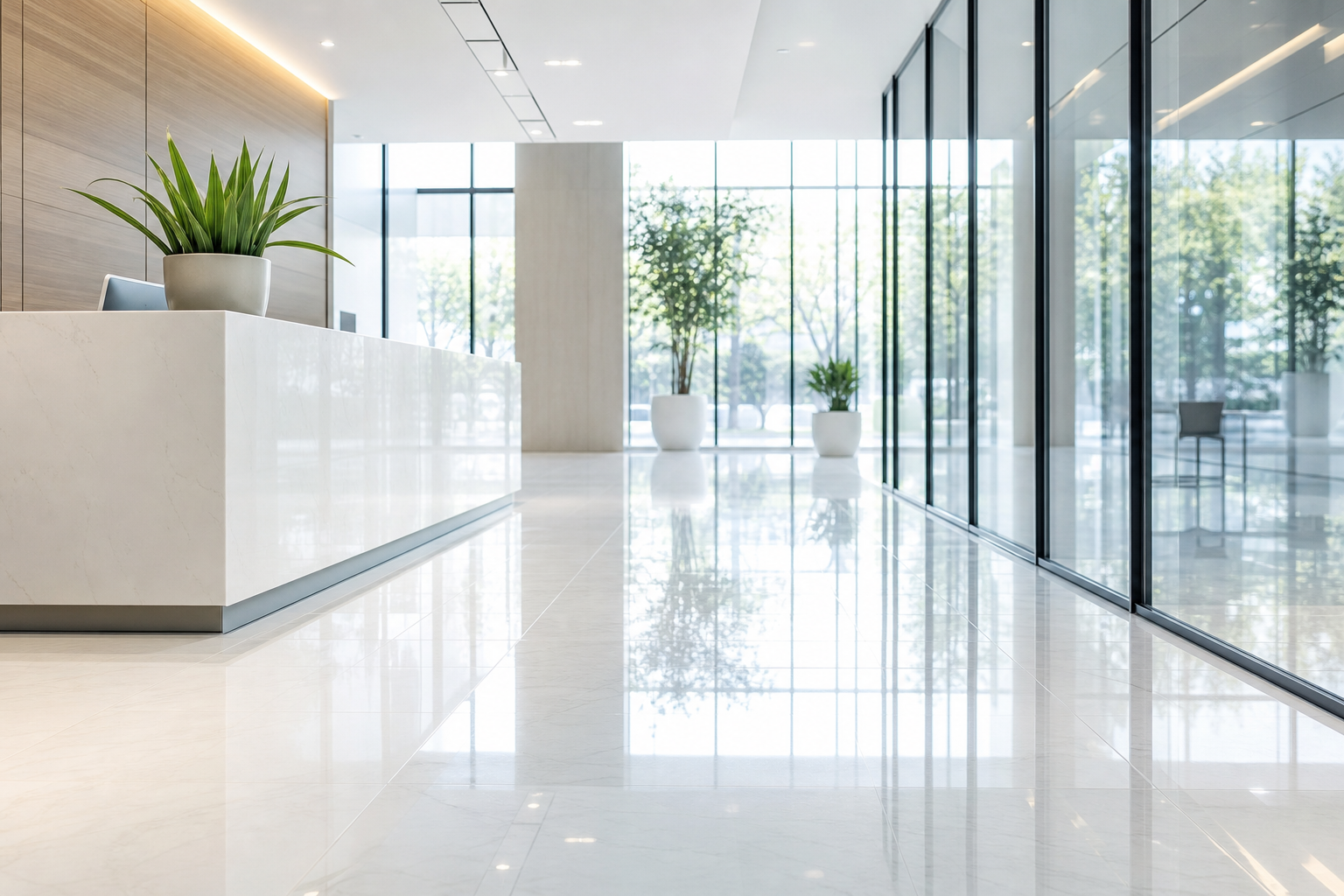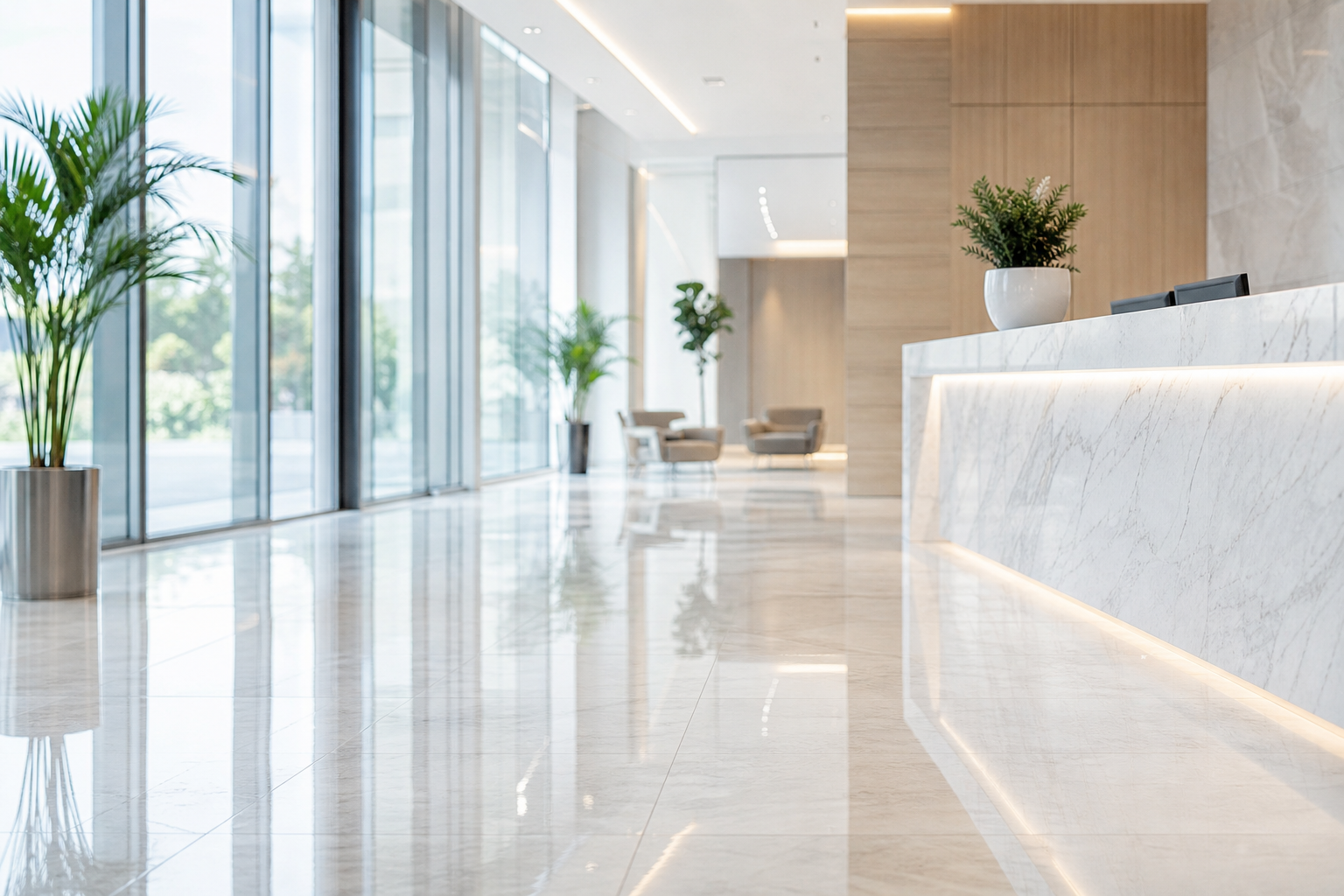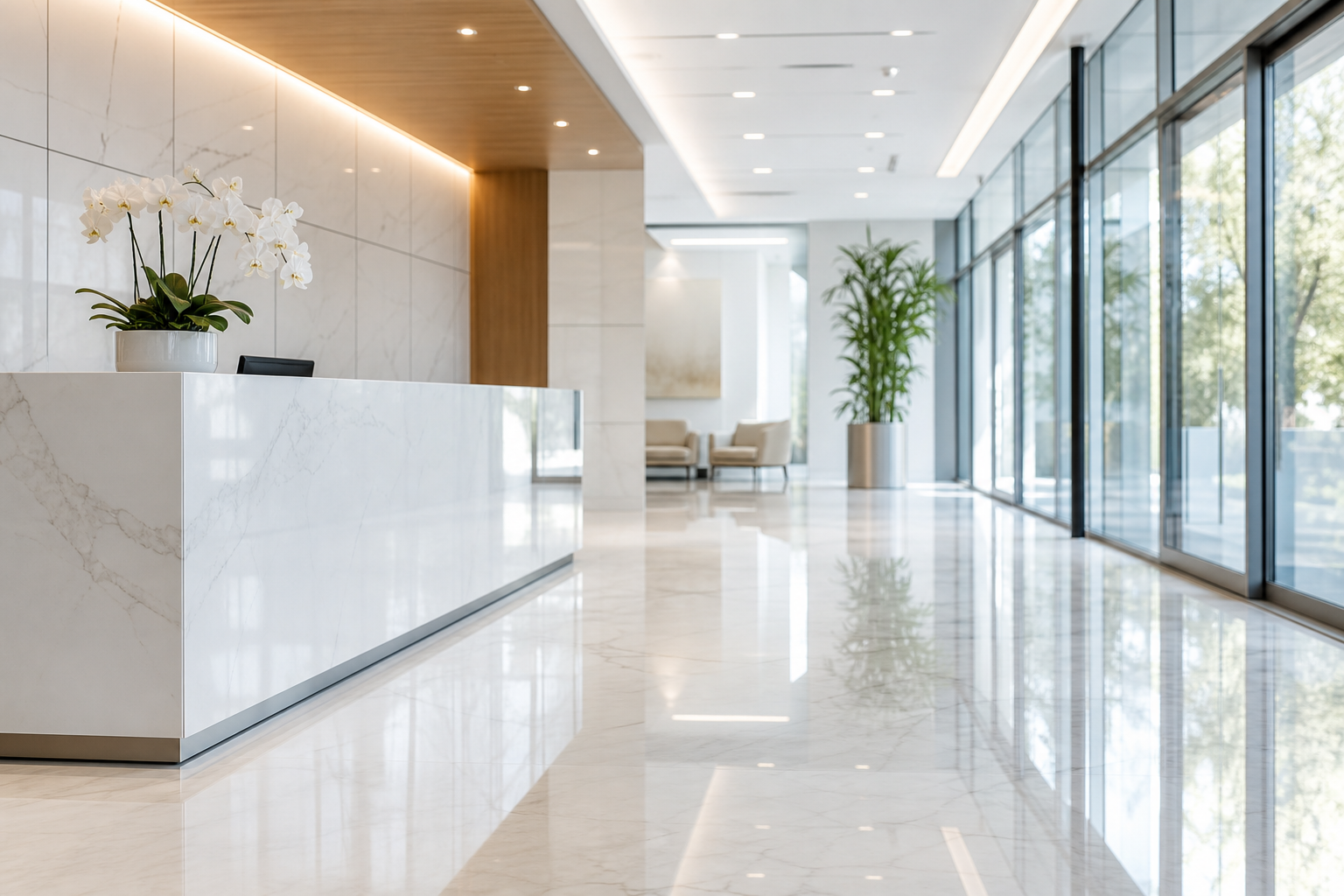
In automotive retail, your showroom floor is more than a surface—it’s a high-visibility sales asset that communicates quality before a customer speaks to your team. The moment a buyer steps through the door, they subconsciously evaluate cleanliness, shine, and safety as signals of how well you operate, how you maintain vehicles, and whether your dealership is “premium” or “problematic.”
Facility managers and dealer principals know the operational reality: constant foot traffic, tire marks, tracked-in grit, coffee spills, and winter de-icers can degrade floor appearance fast. When floors lose gloss or become slippery, you don’t just lose aesthetics—you increase risk, accelerate finish failure, and invite higher long-term maintenance costs. A structured floor care program is one of the most measurable ROI plays in the facility, reducing premature refinishing, minimizing slip-and-fall exposure, and supporting higher conversion in a competitive showroom environment.
First Impressions Are Measurable: Clean Floors Influence Trust, Time-in-Store, and Conversion
Research consistently shows that cleanliness drives consumer confidence and dwell time in retail spaces. The International Sanitary Supply Association (ISSA) has reported that a cleaner retail environment can increase customer satisfaction and can influence likelihood to return—both critical in dealership sales cycles where trust and comfort matter. In addition, visible floor defects (dull traffic lanes, edge buildup, scratches, embedded soil) are interpreted as poor maintenance, which can quietly undermine perceived vehicle value and negotiation leverage.
Actionable improvement starts with treating showroom floors like a “front-of-house revenue zone” rather than a back-of-house janitorial task. Use objective quality checks—gloss readings, soil load tracking at entrances, and documented spot-response times—to maintain a consistent appearance standard. The best-performing dealerships align floor care frequency with traffic patterns (weekends, promotions, delivery days) and adjust tactics seasonally to prevent soil from becoming embedded and permanently dulling the finish.
- Implement a daily “traffic lane” program: dust mop/auto-scrub during low-traffic windows and spot-clean within minutes of spills to prevent staining and slip hazards.
- Use entry matting correctly: a minimum of 10–15 feet of walk-off matting at primary entrances to reduce tracked-in grit that acts like sandpaper on finishes.
- Measure appearance, not just effort: schedule periodic gloss checks and documented inspections to catch dulling, scratches, and edge buildup before they require costly restoration.
Safety and Liability: Floor Cleanliness Must Align with OSHA and Slip-Resistance Expectations
Dealerships are public-facing workplaces, and floor safety is a liability priority. OSHA’s Walking-Working Surfaces requirements (29 CFR 1910 Subpart D) emphasize keeping floors clean, orderly, and in a sanitary condition, and addressing hazards such as wet or slippery surfaces. Beyond compliance, slip-and-fall incidents are among the most expensive premises claims in retail environments—costing far more than preventative maintenance when you account for medical expenses, legal fees, lost productivity, and reputational damage.
Cost-efficient risk reduction comes from pairing the right chemistry and equipment with standardized procedures. For example, neutral cleaners protect floor finishes and reduce residue that can contribute to slip risk, while microfiber tools improve soil capture versus traditional cotton methods. High-traction finishes and burnishing programs can maintain gloss without over-applying product, and clear “wet floor” protocols reduce incident exposure. A professional cleaning provider can also document training, inspections, and corrective actions—critical components of defensible facility management.
Protecting the Asset: Correct Maintenance Extends Finish Life and Cuts Restoration Costs
Showroom floors—whether polished concrete, VCT/LVT, porcelain tile, or epoxy—fail faster when soil is allowed to grind into the surface or when the wrong chemicals are used. High-alkaline degreasers, over-wetting, and improper pad selection can strip or haze finishes, leaving permanent dullness and requiring aggressive restoration. Industry best practice aligns with the ISSA Cleaning Management Standard (CIMS) approach: documented processes, quality control, and continuous improvement, which translate directly into longer lifecycle performance for floors.
The operational takeaway is simple: planned maintenance is cheaper than reactive restoration. A structured program typically includes daily soil removal, periodic machine scrubbing, scheduled burnishing (where applicable), and quarterly or semi-annual deep cleaning based on traffic and seasonal conditions. When you replace emergency strip-and-wax cycles with predictive maintenance, you reduce labor spikes, limit downtime, and keep the showroom consistently “sale-ready” for events, OEM visits, and high-value customer appointments.
Conclusion
Your showroom floors are your dealership’s first sales pitch—signaling professionalism, vehicle quality, and operational discipline in seconds. By investing in an evidence-based floor care program that prioritizes appearance, safety, and finish protection, dealerships can reduce liability risk, extend flooring life, and maintain a consistent brand experience that supports closing rates.
If you want showroom floors that stay glossy, safe, and inspection-ready without constant disruption, partner with a professional commercial cleaning team that uses documented procedures, compliant safety practices, and the right equipment for your floor type. The payoff is measurable: fewer restoration events, lower risk exposure, and a showroom environment that helps your sales team win more confidently—every day.