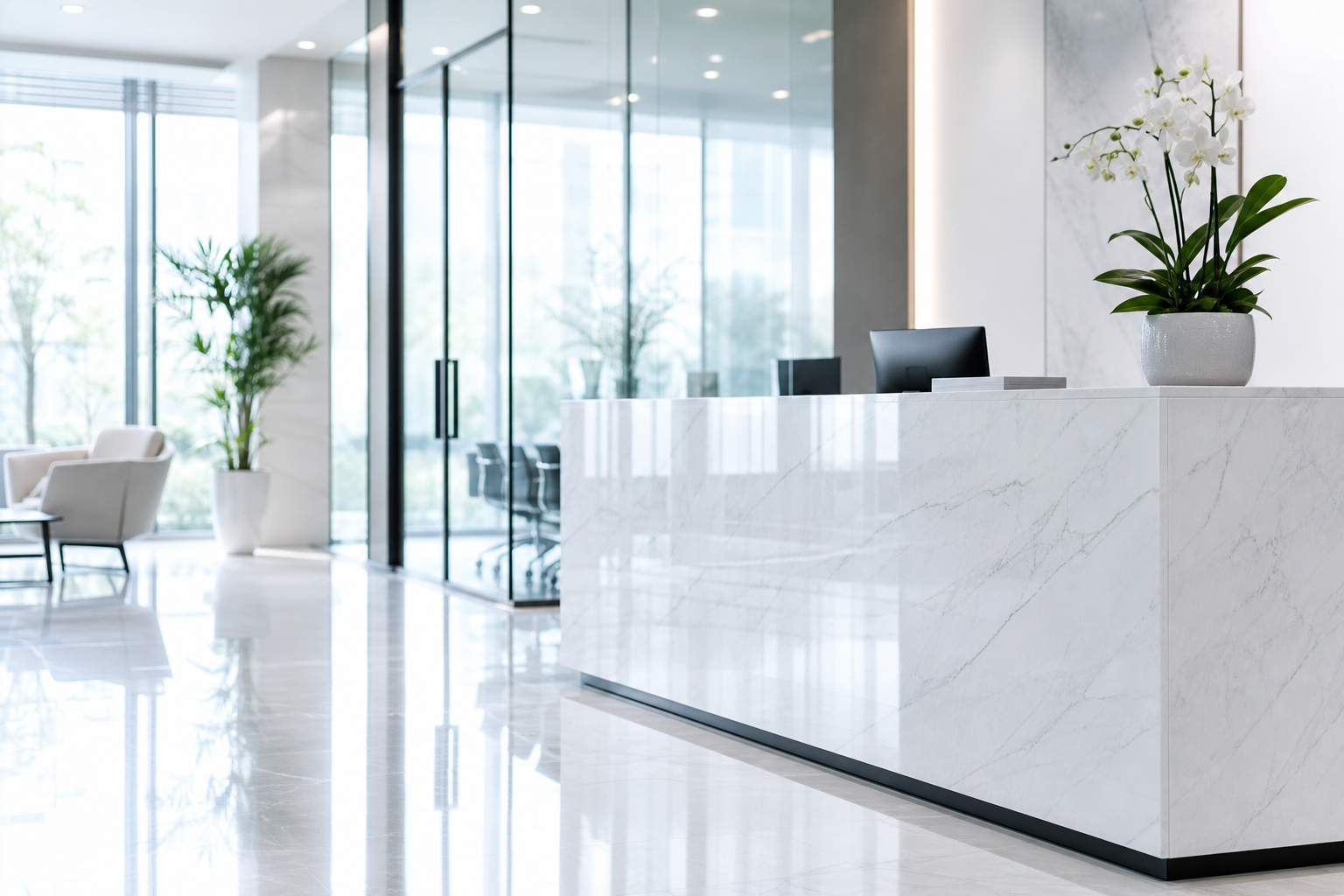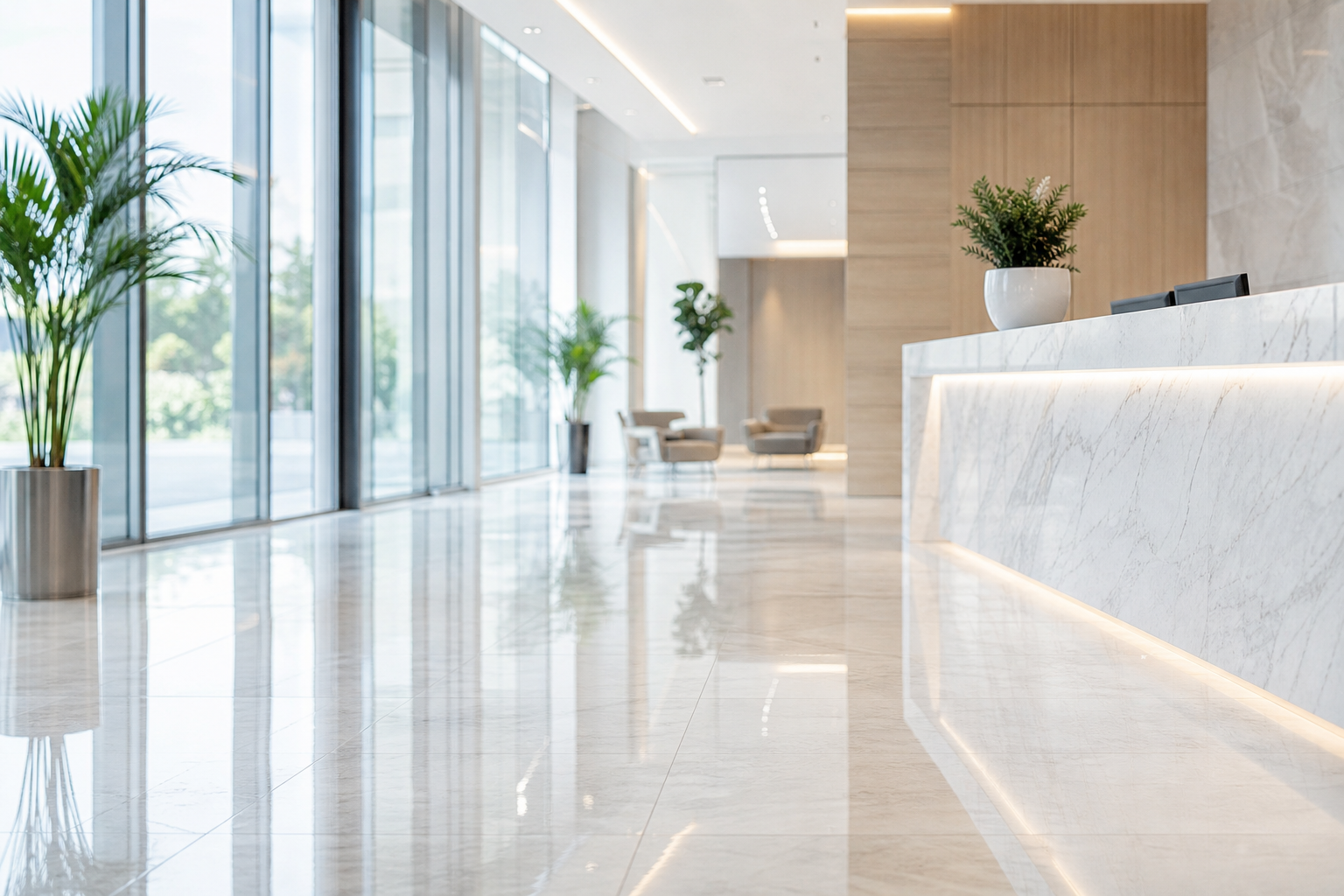
In a dealership showroom, your floor is not just a surface—it’s a high-visibility brand asset that shapes first impressions before a salesperson says a word. Gloss, clarity, and cleanliness signal quality and attention to detail, while scuffs, salt staining, and dull finishes quietly suggest neglect and reduce perceived value of the vehicles you’re trying to premium-price.
For owners and facility managers, the challenge is balancing appearance with durability and cost control in a space that takes constant foot traffic, rolling loads, and seasonal contamination. The ROI is real: maintaining showroom floors with a planned, manufacturer-aligned program reduces premature refinishing, lowers slip-and-fall exposure, and protects the customer experience that influences close rates and CSI scores.
First Impressions Are Visual—and Floors Dominate the Visual Field
Customers subconsciously read cleanliness as competence. Research on first impressions consistently shows people form judgments within seconds of entering an environment, and in an open showroom the largest uninterrupted “canvas” is the floor. A spotless, reflective finish enhances lighting, makes vehicles pop, and creates that premium “new car” feel that supports your pricing and F&I confidence.
Operationally, showroom floors fail in predictable ways: micro-scratching from grit, heel marks, tire plasticizer staining, and salt residue in winter. The fix is not more random mopping—it’s controlling particulate at the door, using the right neutral chemistry for daily care, and scheduling restorative work before the finish or coating collapses. A disciplined program maintains gloss levels, reduces labor rework, and prevents costly shut-downs for emergency refinishing.
- Install and maintain high-performance entry matting (at least 10–15 feet of walk-off coverage) to capture grit that causes micro-scratching and dullness.
- Use a pH-neutral cleaner and microfiber flat mopping or auto-scrubbers with the correct pads/brushes to avoid haze and swirl marks.
- Implement a documented floor maintenance schedule (daily, weekly, quarterly) that includes burnishing, top-scrub/recoat (VCT), or recoating (concrete/epoxy) based on measured wear.
Safety, Liability, and Compliance: Clean Floors Reduce Preventable Risk
Slip-and-fall exposure is a material risk in dealerships due to wet entryways, detailing overspray, and winter de-icing salts. OSHA requires employers to keep walking-working surfaces clean, orderly, and in sanitary condition (29 CFR 1910 Subpart D), and slip resistance is increasingly treated as a duty-of-care issue in facility operations. A polished floor that’s contaminated with oily film or improper finish is not “clean”—it’s a liability.
From a cost-efficiency standpoint, a professional program emphasizes preventive controls: rapid response to spills, correct dwell time and rinse practices to eliminate residue, and the right finish/coating for the substrate and traffic pattern. This reduces incident probability, helps defend claims with documented procedures, and avoids the hidden costs of reactive cleaning—overtime labor, lost showroom uptime, and reputational damage after an accident.
Floor Systems and ROI: Match the Maintenance Plan to the Material
Not all showroom floors should be treated the same. VCT relies on finish layers for appearance and protection; polished concrete depends on densification and correct pad systems; epoxy and urethane coatings require compatible cleaners and periodic recoating to prevent peeling or gloss loss. Industry guidance such as ISSA cleaning standards and manufacturer specifications consistently emphasize that mismatched chemistry and abrasive tools are leading contributors to premature wear—meaning your “savings” on supplies can become a five-figure refinishing event.
ROI improves when maintenance is planned and measurable. A structured program typically shifts spending from emergency restoration to predictable upkeep: improved soil containment reduces daily labor minutes, and scheduled burnishing or recoating extends lifecycle. For many dealerships, extending a refinishing cycle even by 12–24 months—while keeping consistent gloss—can offset the cost of professional service through reduced downtime, fewer customer complaints, and lower long-term floor replacement risk.
Conclusion
Your showroom floor is your dealership’s first sales pitch—an immediate, highly visible signal of quality that supports vehicle presentation, customer confidence, and brand reputation. When floors are maintained with the right chemistry, equipment, and scheduled restoration, you protect safety, preserve the asset, and keep the showroom looking “new” every day without runaway costs.
If you want consistent, high-gloss showroom presentation with documented safety practices and a maintenance plan that extends floor life, partner with a professional commercial cleaning team that understands dealership traffic patterns, floor system requirements, and ROI-focused scheduling. The result is fewer surprises, better customer impressions, and a showroom that sells before your staff ever starts the conversation.