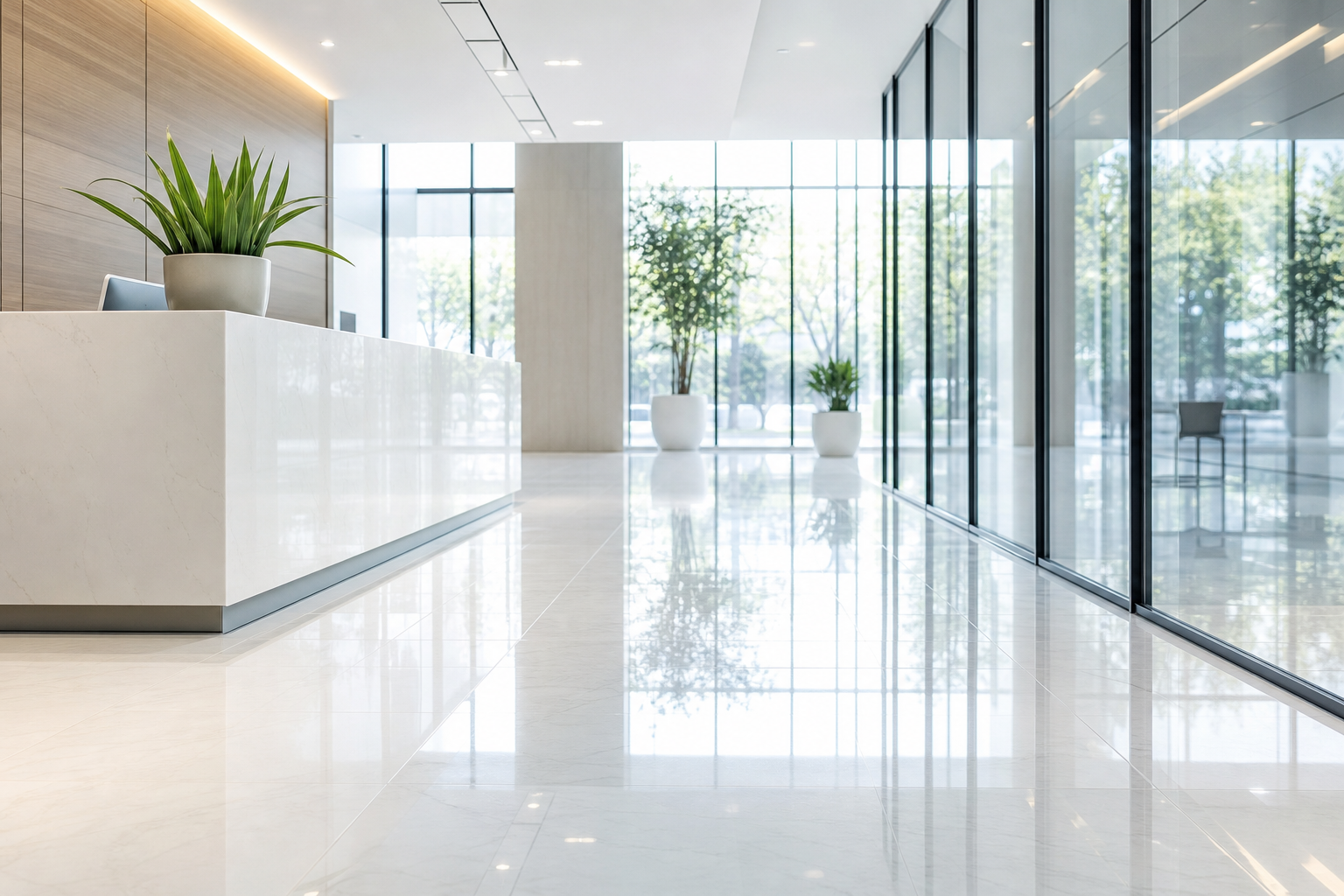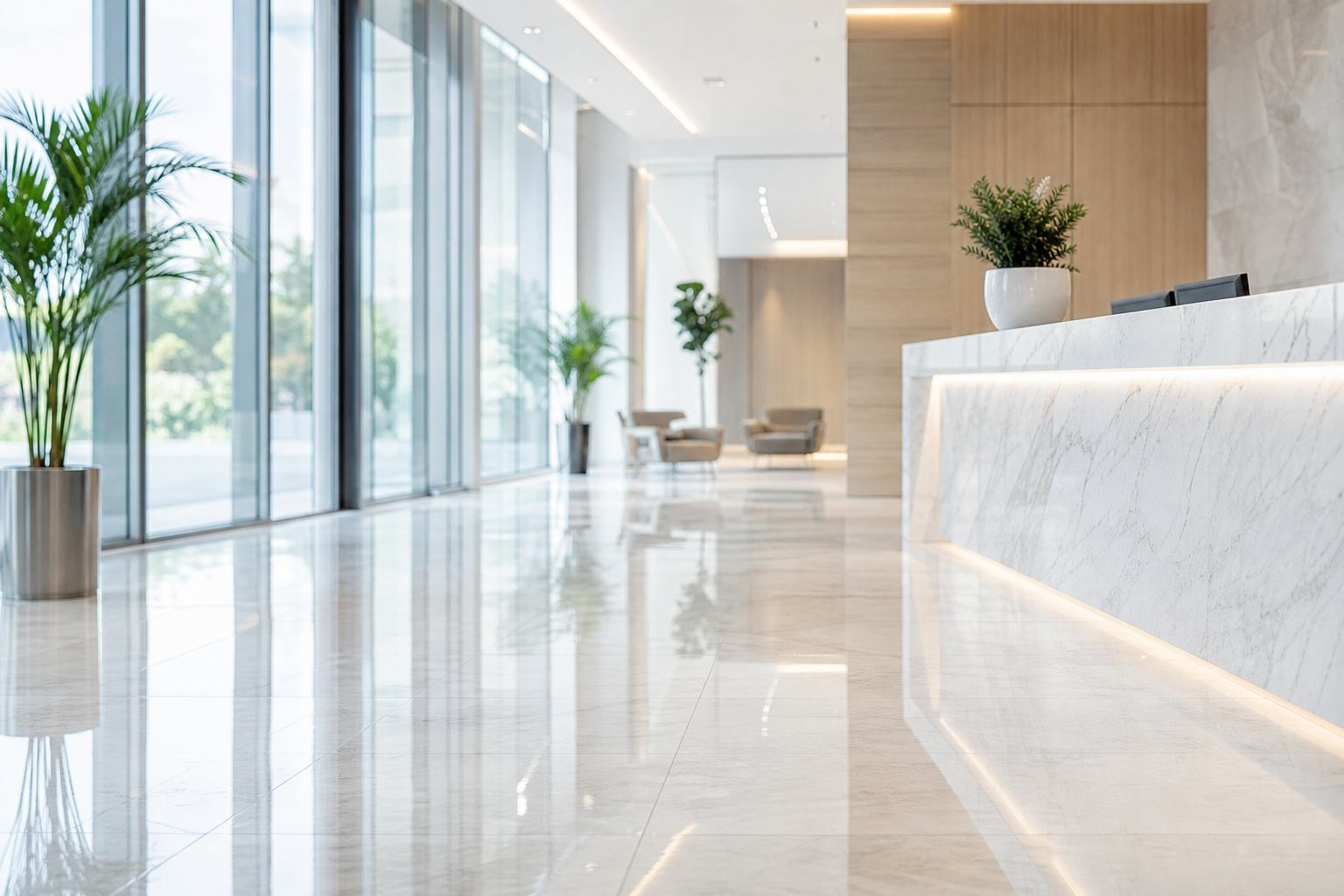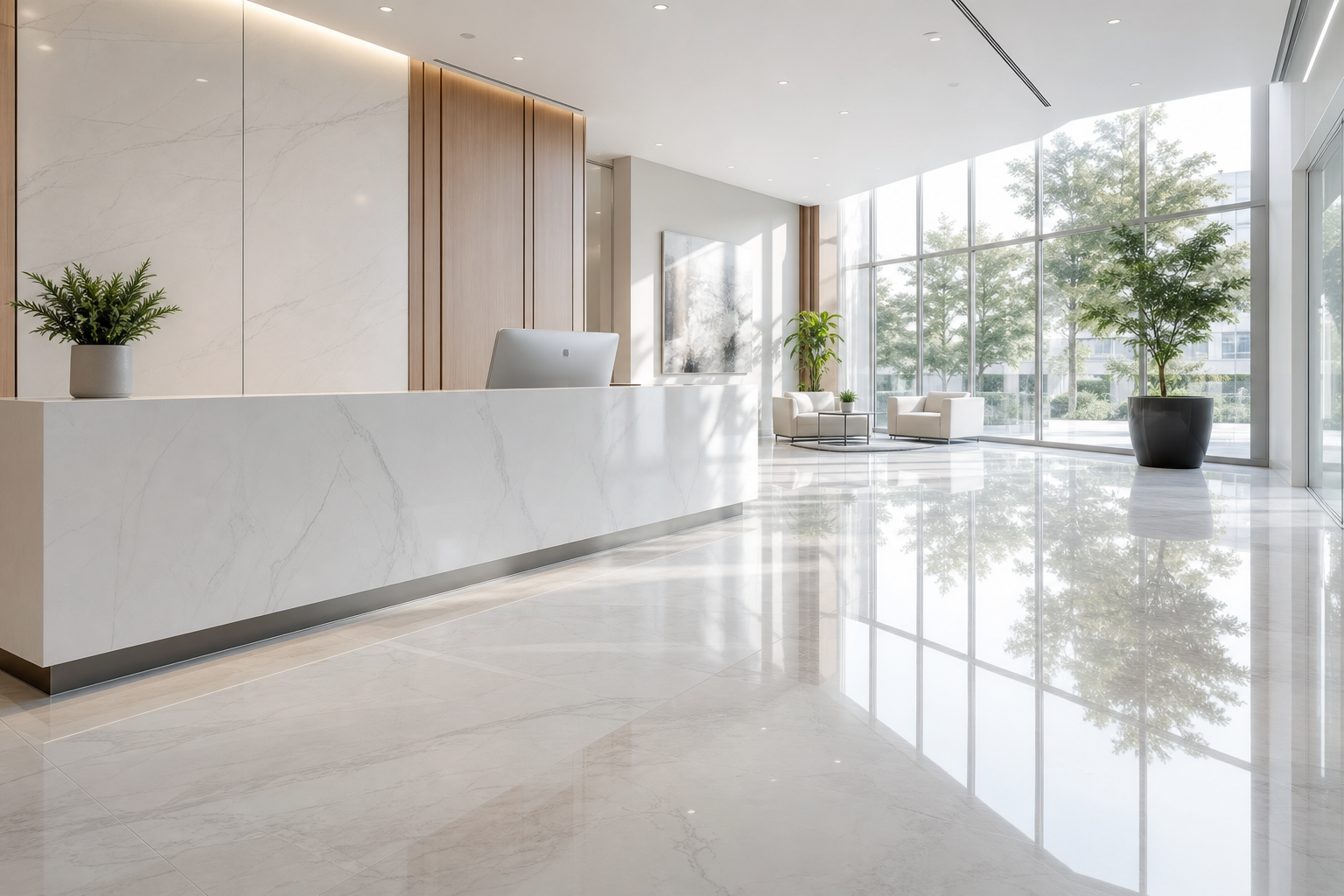
In an automotive dealership, the showroom floor is more than a surface—it’s a high-impact branding asset that customers evaluate instantly, often before a salesperson says a word. Gloss levels, grout lines, tire marks, and corner build-up all communicate operational discipline (or the lack of it), influencing perceived vehicle quality, trust, and willingness to negotiate.
Because most dealerships operate on tight margins and high customer acquisition costs, floor appearance isn’t a “nice-to-have”; it’s a controllable variable in your sales funnel. When floors are consistently clean, bright, and slip-safe, you reduce negative first impressions, protect your finishes from premature failure, and avoid costly reactive restorations—all while improving the customer experience and employee safety.
First Impressions: The Floor Sets the Price Before the Conversation Starts
Customers make rapid judgments about a business environment in seconds, and in a showroom those judgments anchor expectations about vehicle condition, service integrity, and pricing transparency. Research in retail and service environments consistently shows that cleanliness and visual order strongly influence perceived quality and trust—two factors that directly affect closing confidence and the customer’s sensitivity to price.
From an operational standpoint, the most common showroom floor issues are predictable: salt and grit tracked from the lot, tire rubber transfer, polish haze from improper burnishing, and dull traffic lanes caused by finish wear. The fix is not “more mopping”—it’s a documented floor care program tied to soil load, footfall, and finish type, supported by the right equipment and chemistry.
- Implement a soil-control system (exterior scraper mat + interior wiper mat) to reduce tracked-in grit that acts like sandpaper on finishes and accelerates wear.
- Use a scheduled auto-scrub and detail program with manufacturer-approved neutral cleaners to prevent haze, residue, and slip risk from overuse of degreasers.
- Adopt periodic restoration (burnish/spray-buff or scrub-and-recoat) based on measurable gloss loss and traffic patterns—not on complaints.
Safety, Liability, and Compliance: Clean Floors Also Reduce Risk
Showrooms combine hard, smooth flooring with high traffic, wet-weather entry, and frequent turning movements—conditions that elevate slip-and-fall exposure if cleaning is inconsistent or chemistry is misapplied. OSHA emphasizes that walking-working surface hazards must be addressed to prevent slips, trips, and falls (29 CFR 1910 Subpart D), and wet floors without controls (signage, drying time management, correct dilution) are among the most common preventable risks.
A professional floor program improves safety while protecting aesthetics: faster dry times reduce hazards and reopen the showroom quicker; controlled chemical dilution prevents residue that can increase slipperiness; and machine cleaning removes fine particulates that mops tend to redistribute. The cost-efficiency is straightforward—reducing incident risk and avoiding finish failure typically costs far less than claim exposure, emergency restoration, and downtime during peak sales hours.
Protecting the Asset: A Planned Floor Care Program Delivers Measurable ROI
Flooring is a capital asset with a predictable lifecycle, and poor maintenance accelerates replacement timelines. Industry guidance from ISSA and leading flooring manufacturers consistently stresses that “cleaning for appearance” is secondary to “cleaning for preservation”: removing abrasive soil, using correct pads/brushes, and maintaining protective coatings extends service life, stabilizes gloss, and reduces total cost of ownership. In dealership settings, where bright lighting and reflective finishes amplify defects, even minor neglect quickly becomes visible and expensive to correct.
The most cost-effective approach is proactive maintenance: daily removal of particulates, scheduled machine scrubbing, and periodic recoating before the base layer fails. This reduces the frequency of full strip-and-wax cycles (high labor, odor, disruption) and helps keep the showroom consistently “sale-ready.” When floor care is planned and documented, you gain predictable budgeting, fewer after-hours emergencies, and a customer environment that supports premium perception.
Conclusion
Your showroom floor is your dealership’s first sales pitch—communicating trust, quality, and professionalism before a customer ever touches a vehicle door handle. With the right maintenance plan, you can improve visual impact, reduce safety exposure, and extend floor life, turning cleaning from a reactive cost into a controllable operational advantage.
If you want a showroom that sells for you every day, partner with a professional commercial cleaning team that understands dealership traffic patterns, flooring systems, and finish maintenance. A tailored floor care program delivers consistent appearance, faster recovery after weather events, safer walking surfaces, and lower long-term costs—so your facility looks premium, performs better, and supports higher-converting customer experiences.