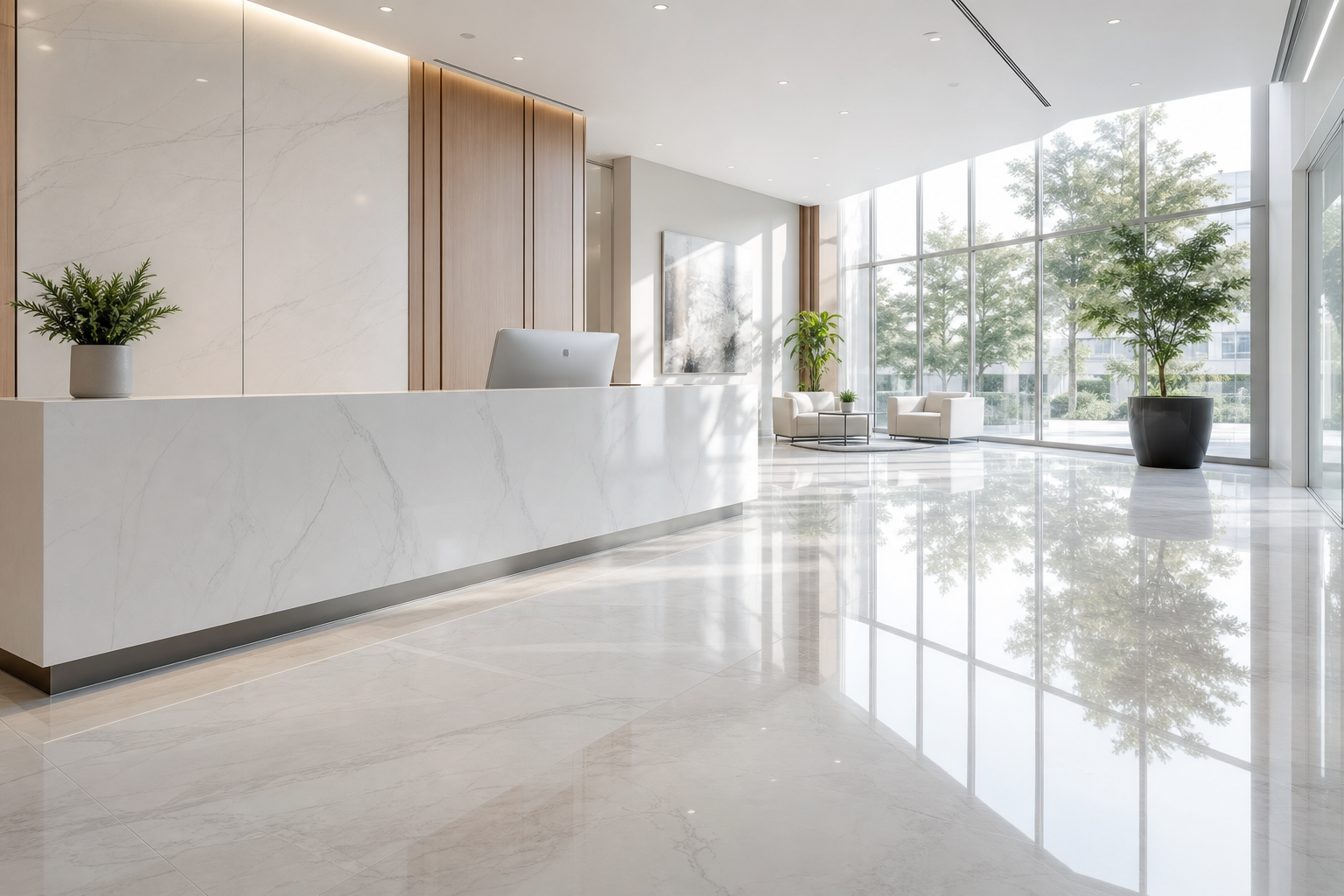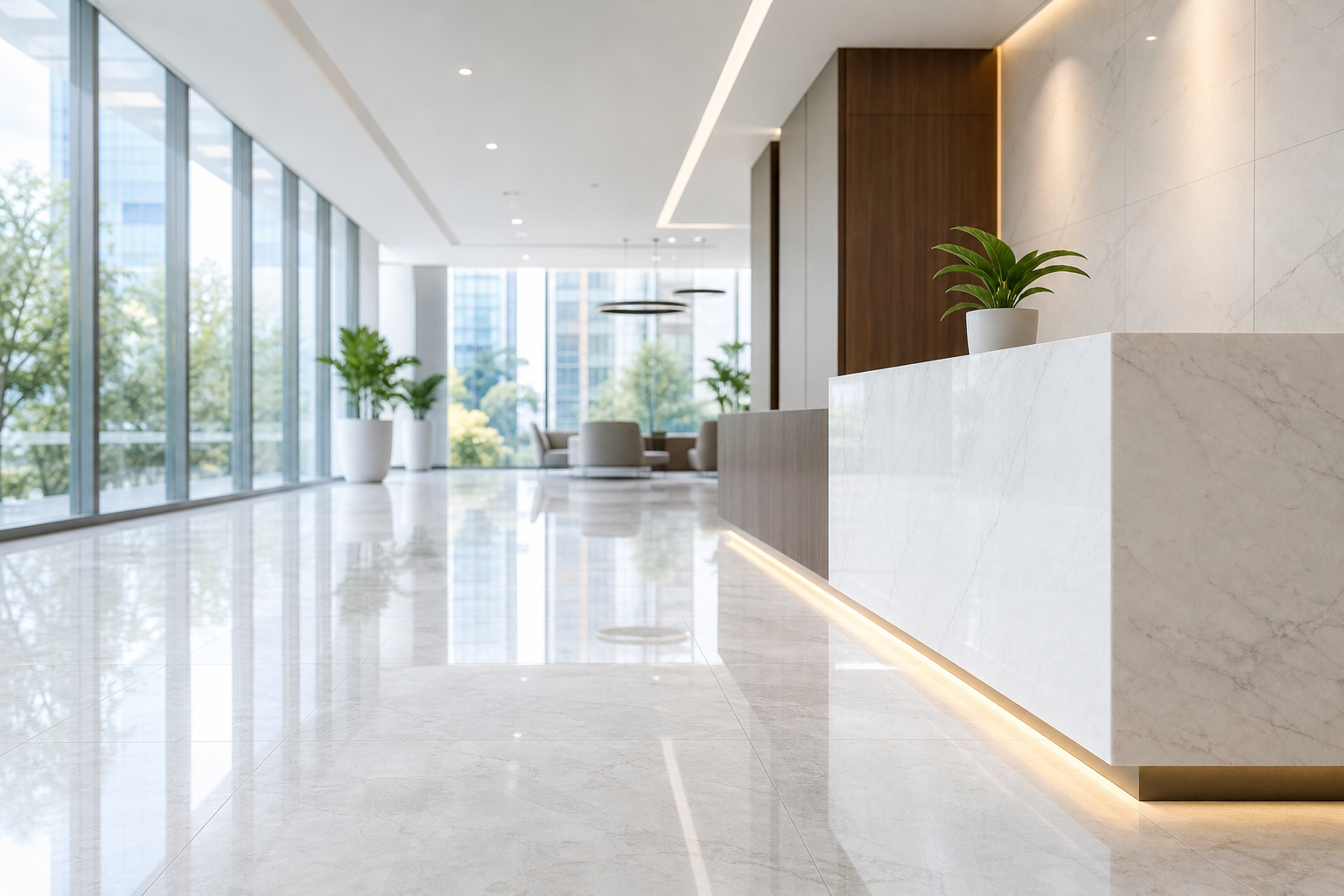
In an automotive showroom, your floors do more than support foot traffic—they set the tone for trust, quality, and professionalism the moment a prospect walks in. Before a customer evaluates trim packages, financing, or warranty coverage, they subconsciously judge whether your dealership feels premium, well-managed, and credible—and flooring condition is one of the most visible indicators.
For dealership owners and facility managers, that makes floor care a revenue-protecting asset, not a cosmetic expense. Scuffed VCT, hazy polished concrete, stained grout, or slippery entryways quietly erode confidence, extend decision time, and increase safety exposure. The good news: with the right cleaning technologies, maintenance frequencies, and measurable standards, showroom floor care delivers a clear ROI through higher customer confidence, lower slip-and-fall risk, and longer floor life.
First Impressions Are Built on Visual Cues—and Floors Dominate the Field of View
Customers may not be able to judge the quality of your service department at a glance, but they can instantly see neglected floors: dullness, wheel marks, salt residue, staining, and uneven gloss. Environmental psychology research consistently shows that cleanliness and order influence perceptions of competence and trustworthiness—critical in a high-ticket purchase where buyers already feel risk. In practical terms, a bright, uniform floor finish helps vehicles “pop,” improves lighting reflectance, and reinforces a premium buying experience.
To manage floors as a sales tool, treat them like a brand surface with defined appearance standards and inspection checkpoints. Establish measurable expectations (gloss level, uniformity, stain/mark tolerance) and align cleaning methods to your specific floor type—VCT, terrazzo, porcelain tile, polished concrete, epoxy, or rubber. Use entryway matting and frequent dust mopping to reduce abrasion from grit, which is one of the fastest ways to dull a showroom and permanently scratch finishes.
- Implement a “zone cleaning” plan: high-visibility showroom lanes, entry transitions, and customer waiting areas should receive higher-frequency detailing than back-of-house corridors.
- Adopt a matting strategy that captures soil before it hits the showroom floor (scraper mat outside, wiper mat inside, 10–15 feet of coverage to reduce tracked-in grit and moisture).
- Use the right chemistry and pads for the surface (neutral cleaners for daily; targeted degreasers only where needed; avoid high-alkaline products that haze polished concrete or strip floor finish prematurely).
Safety and Compliance: Slip Resistance Is a Sales and Liability Issue
Dealership floors face unique slip risks—rain and snow tracked in, floor dressings, tire shine overspray, and service-lane residues migrating into customer areas. Beyond customer experience, this is a risk-management priority. OSHA’s Walking-Working Surfaces standard (29 CFR 1910 Subpart D) requires floors to be kept clean, orderly, and in a sanitary condition, and requires that hazards be addressed. Wet or contaminated entryways and glossy-but-slippery floors can quickly become a liability exposure.
Cost-efficiency comes from preventing incidents and avoiding unnecessary restoration. The highest ROI is achieved when cleaning programs prioritize soil removal and slip resistance, not just shine. That means using microfiber or high-filtration dust control, autoscrubbers with proper squeegee maintenance, and quick-response spill protocols—especially in entrances and near beverage stations. A professional cleaning provider can also document procedures (inspection logs, incident response steps, SDS management) to strengthen defensibility and reduce operational disruption.
Protecting Floor Life: A Lifecycle Strategy Beats “Fix It When It Looks Bad”
Most dealership flooring failures are not sudden—they’re cumulative. Abrasive soil wears away protective coatings and surface polish, then staining and embedded dirt make daily cleaning less effective, leading to overuse of aggressive chemicals, which accelerates deterioration. For VCT and similar resilient floors, repeated stripping and rewaxing is expensive, labor-intensive, and operationally disruptive. Modern best practice emphasizes a planned maintenance cycle: daily soil removal, periodic scrub-and-recoat, and targeted restoration only when needed.
The operational takeaway is straightforward: the cheapest way to maintain a consistently “sales-ready” showroom is to reduce soil load, use the correct equipment, and intervene early with low-disruption methods. Burnishing programs for finished floors, diamond polishing maintenance for polished concrete, and machine scrubbing with proper pad selection can restore clarity and gloss without full restoration. This approach protects capex by extending replacement timelines and protects revenue by keeping the showroom visually sharp during business hours.
Conclusion
Your dealership’s showroom floor is a silent salesperson—constantly influencing customer confidence, perceived vehicle value, and the professionalism of your operation. When floors are consistently clean, uniform, and slip-resilient, they enhance lighting, elevate your brand, reduce safety exposure, and extend the life of expensive surfaces. When they’re neglected, they quietly undermine trust and create avoidable cost.
If you want a showroom that sells before your team even says hello, partner with a professional commercial cleaning service that understands dealership traffic patterns, floor substrates, slip-risk controls, and lifecycle maintenance. A qualified provider can implement measurable appearance standards, modern equipment and chemistry, and a scheduled program that lowers long-term floor costs—while keeping your showroom customer-ready every day.