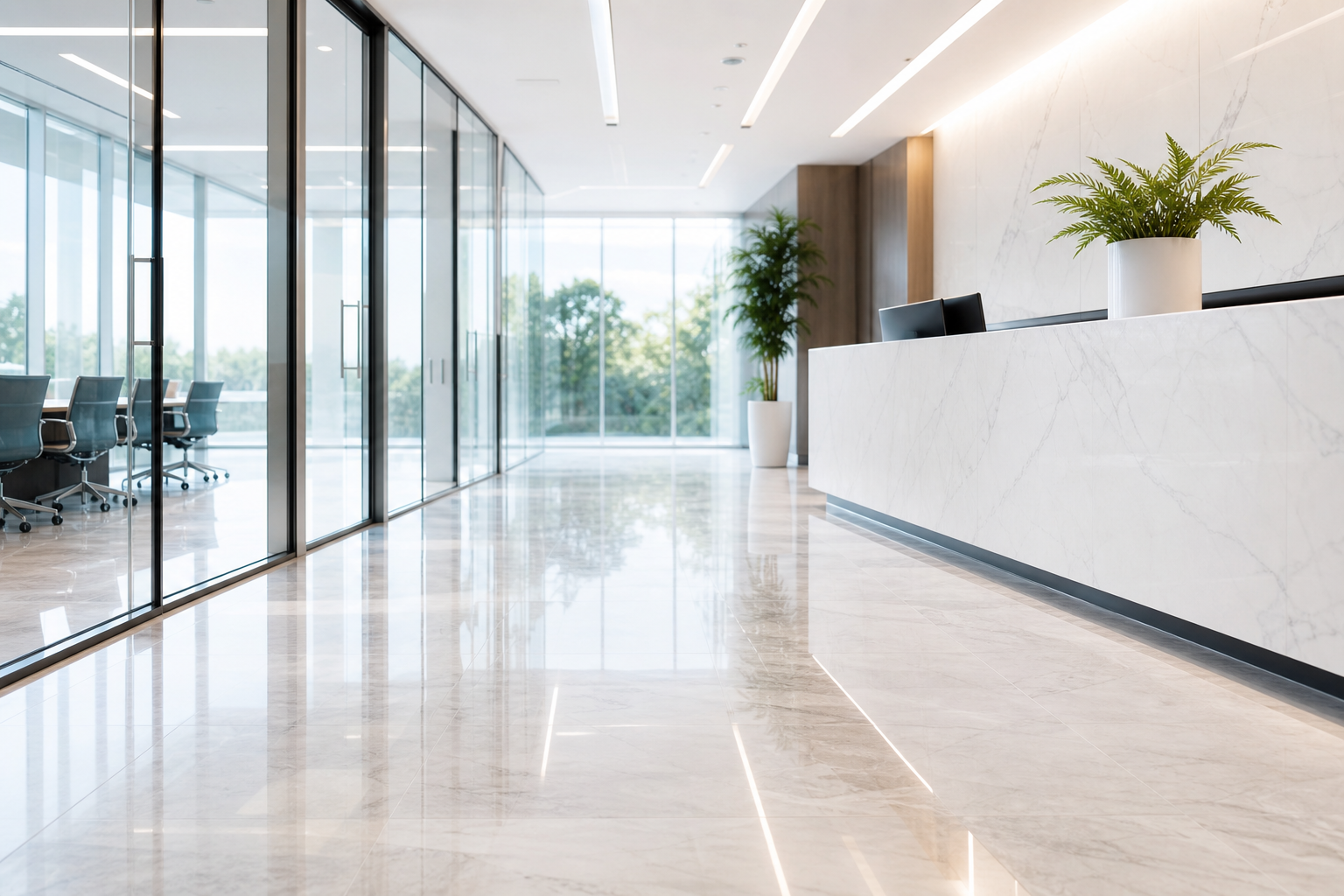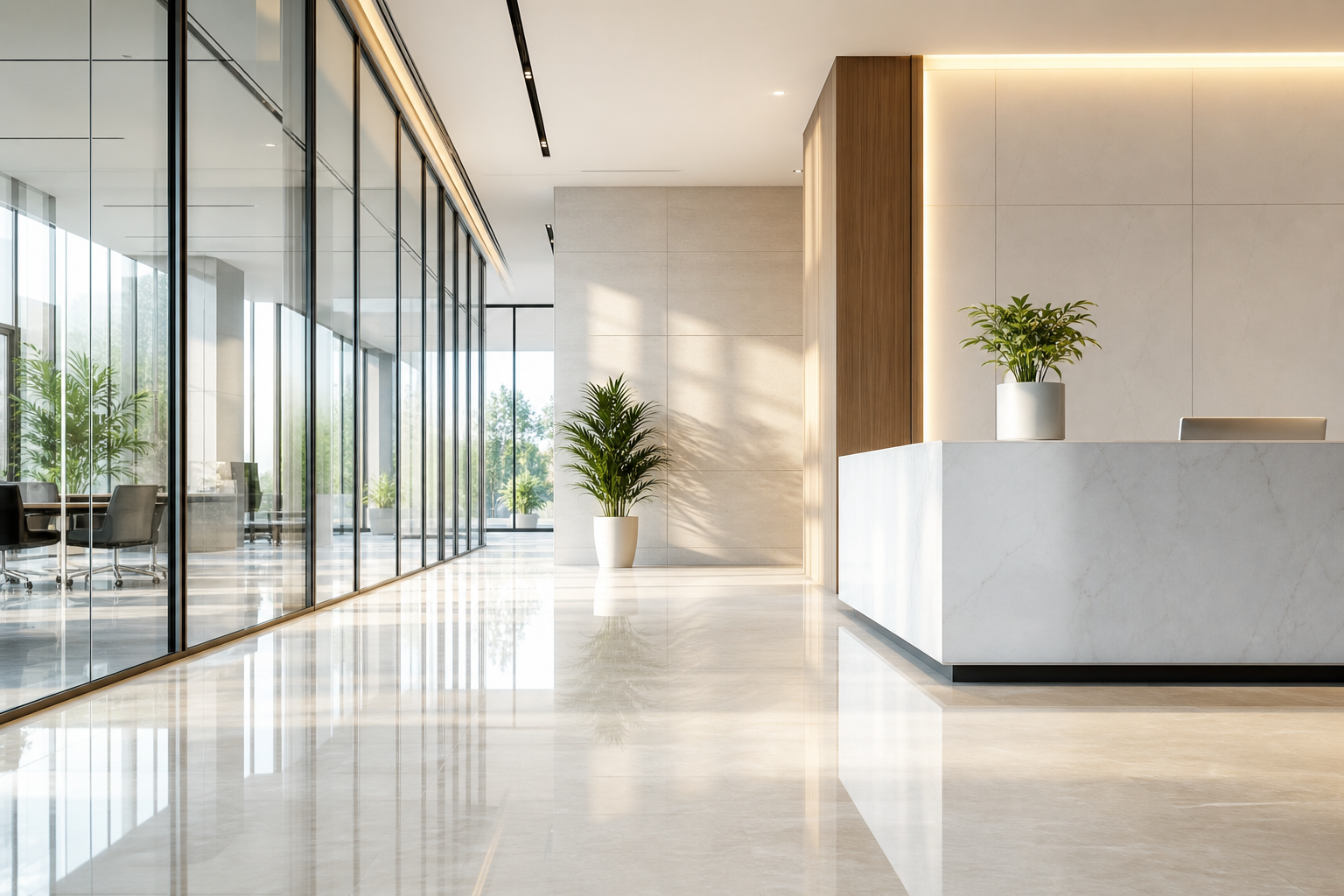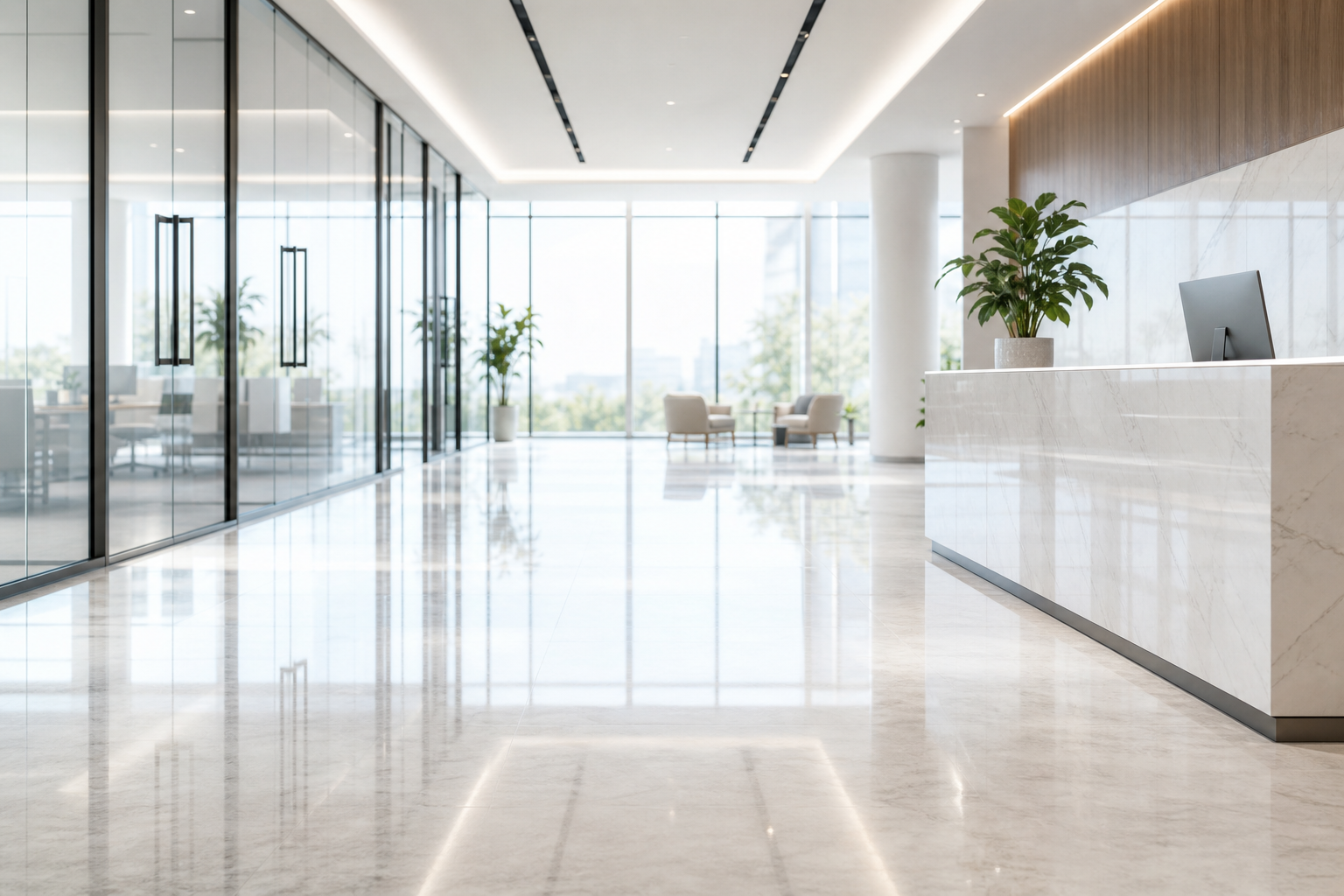
In an automotive dealership, the showroom floor is not a backdrop—it’s a revenue-generating asset. Before a customer test-drives a vehicle, reads a spec sheet, or speaks with a sales consultant, they’ve already formed a judgment based on what they see underfoot: gloss, clarity, cleanliness, and overall facility condition.
For owners and facility managers, the operational reality is clear: showroom floors take constant abuse from foot traffic, tires, seasonal moisture, coffee spills, and airborne dust from service bays. If the floor looks dull, streaked, or worn, it silently communicates “low standards,” which can undermine trust and reduce close rates. Conversely, a well-maintained floor supports the customer experience, reduces slip-and-fall risk, and protects your capital investment—delivering a measurable ROI through lower long-term restoration costs and fewer incidents.
The Psychology of Shine: Clean Floors Build Trust Faster
Dealerships compete on perception as much as price. Clean, high-clarity floors increase the perceived quality of vehicles and the professionalism of the operation—especially under bright LED lighting that highlights haze, micro-scratches, and residue. This matters because facility appearance directly affects customer confidence, and customer confidence influences conversion.
From an operational standpoint, “clean” is not the same as “showroom-ready.” Showroom-ready floors require a controlled cleaning chemistry, correct pad selection, and consistent mechanical action to remove particulate soil without leaving surfactant film. The most common failure points in dealerships are (1) using the wrong neutral cleaner dilution, (2) over-wetting edges and expansion joints, and (3) relying on mop-and-bucket methods that redeposit soil and create streaking—particularly on polished concrete, porcelain tile, and high-gloss VCT/LVT systems.
- Use a walk-off mat program at all entrances (minimum 10–15 feet of matting) to capture grit and moisture before it hits the sales floor.
- Shift from mopping to microfiber flat mopping plus auto-scrubbing with a squeegee/vac recovery system to prevent film, slip risk, and streaking.
- Implement a daytime “spot-response” protocol (spills, tire marks, salt tracking) with approved cleaners to prevent permanent etching or finish damage.
Risk, Liability, and Standards: Clean Floors Are a Safety Program
Showroom floors are a high-exposure liability surface. Slip-and-fall claims remain one of the most common and expensive premises liability events for retail environments, and dealerships are no exception—particularly during rain and snow seasons when water and de-icing salts are tracked inside. Industry guidance like OSHA’s Walking-Working Surfaces standard (29 CFR 1910 Subpart D) expects employers to keep walking surfaces clean, orderly, and in a sanitary condition, including addressing hazards such as wet or slippery surfaces.
Cost-efficiency comes from prevention: consistent soil removal and moisture control reduce the likelihood of incidents, and they also protect floor systems from premature wear. Grit acts like sandpaper, accelerating micro-abrasion on polished concrete and degrading finish on VCT. When a floor loses clarity, operators often overcompensate with heavier chemicals or frequent burnishing—raising labor and consumable costs. A structured, professionally managed program stabilizes appearance with fewer corrective interventions and fewer emergency restorations.
Protecting High-Value Surfaces: Maintenance Strategy and ROI
Different showroom surfaces require different best-practice maintenance plans. Polished concrete needs dust control, correct auto-scrubber pads (often non-aggressive), and periodic re-polishing/guard application where applicable. Porcelain tile demands grout-line soil control and correct chemistry to prevent haze. VCT relies on a documented finish maintenance cycle—scrub-and-recoat intervals that reduce full strip-outs, which are disruptive, chemically intensive, and costly. Following manufacturer specifications and aligning procedures with ISSA/industry best practices helps avoid voided warranties, finish failure, and inconsistent results.
ROI is driven by extending the lifecycle of the floor and reducing unplanned downtime. A proactive plan—daily soil removal, scheduled auto-scrubbing, periodic machine burnishing (where appropriate), and planned restoration—typically costs less over a year than reactive “fix-it” cleaning that escalates into frequent refinishing or surface replacement. Add in the avoided costs of slip incidents, the reduced need for aggressive chemicals, and the improved customer experience, and the floor becomes one of the highest-leverage facility investments in the dealership.
Conclusion
Your showroom floor is your dealership’s first sales pitch—an immediate, non-verbal signal of quality, trust, and operational discipline. When floors are consistently clean, glossy, and safe, they elevate vehicle presentation, protect your brand, and reduce avoidable maintenance and liability costs.
If you want showroom floors that perform like an asset—not a recurring problem—partner with a professional commercial cleaning team that understands dealership traffic patterns, surface-specific maintenance, and safety compliance. The right program will protect your flooring investment, improve customer impressions, reduce incident risk, and deliver measurable ROI through predictable costs and longer floor life—starting with the very first step a buyer takes into your showroom.