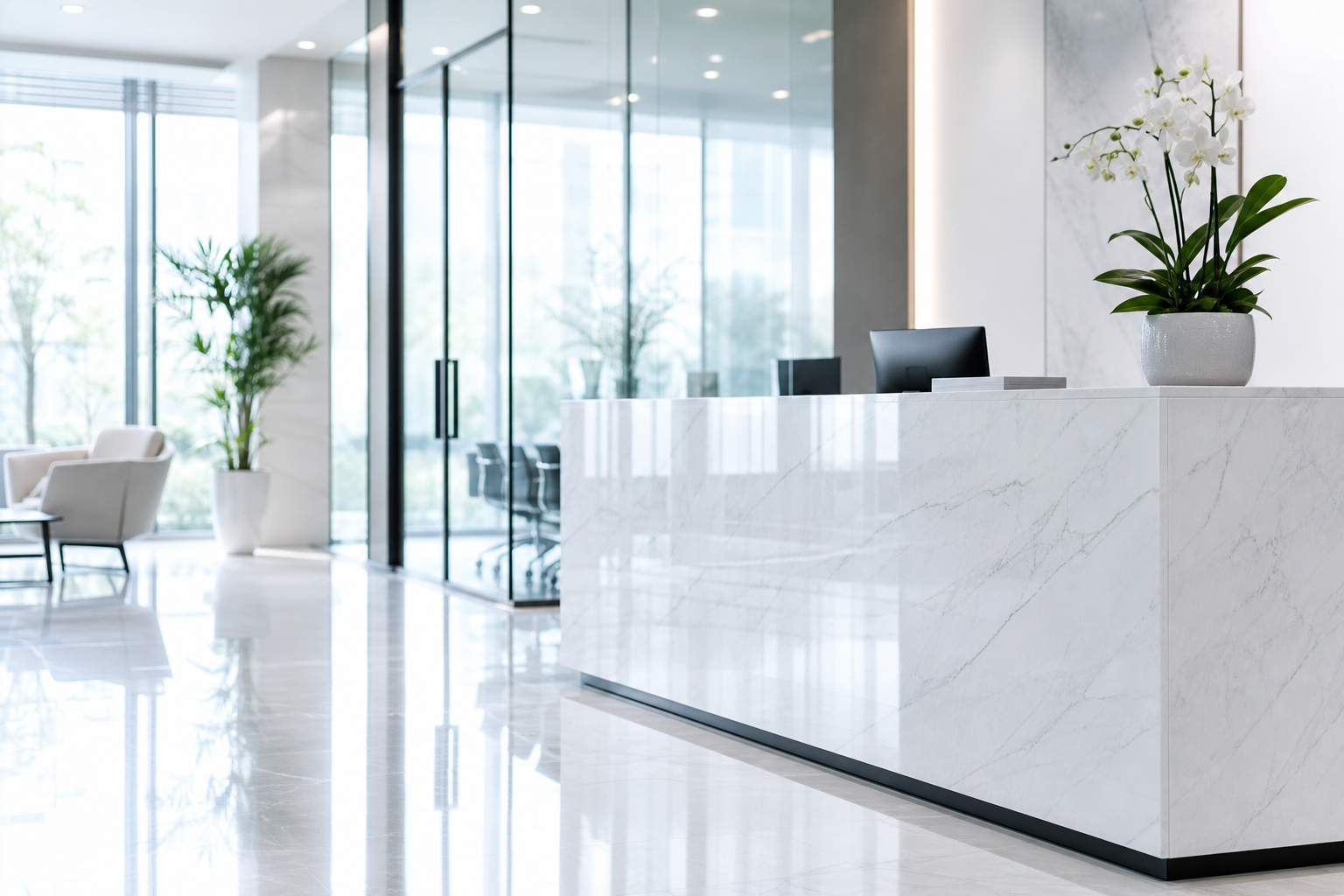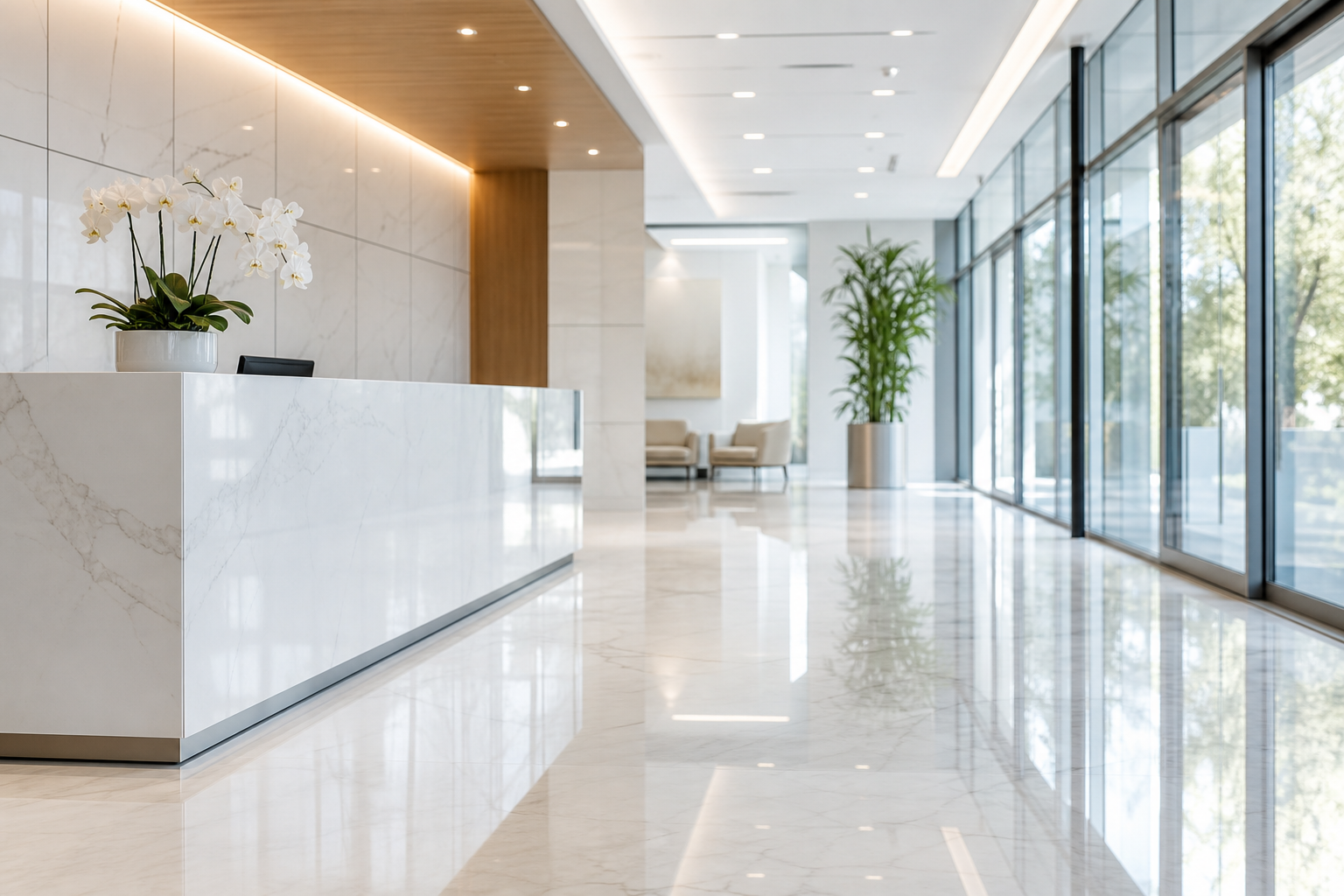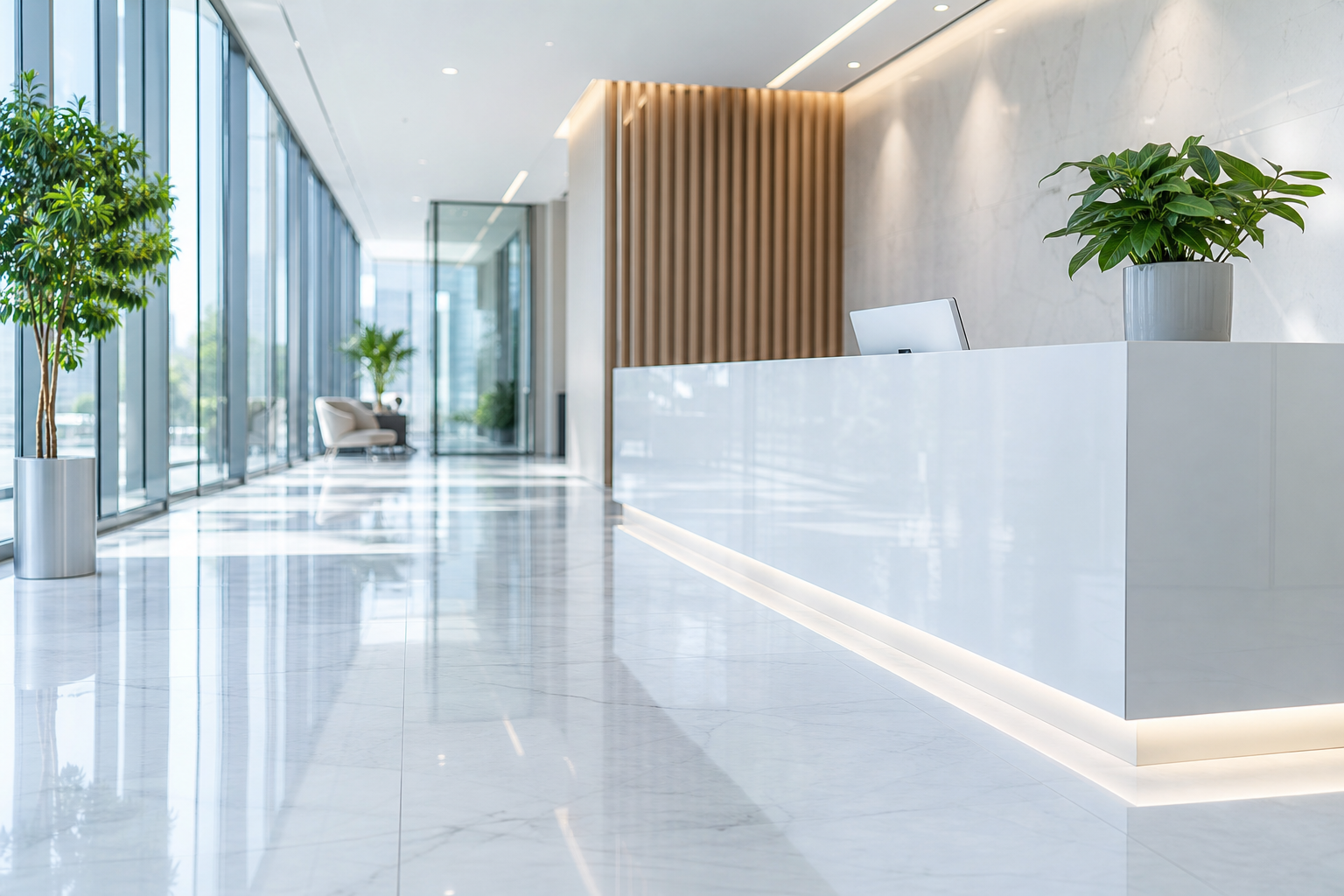
In a competitive automotive market, your dealership’s showroom floor is more than a surface—it’s a high-visibility asset that silently communicates quality, trust, and attention to detail before a salesperson ever says a word. Customers make rapid judgments based on first impressions, and in a space designed to showcase premium inventory under bright lighting, every scuff, haze line, and salt stain becomes part of the story your brand tells.
For owners and facility managers, the challenge is balancing appearance, safety, and durability without overspending or disrupting operations. A well-maintained floor reduces slip-and-fall risk, protects expensive finishes from premature replacement, and supports higher customer confidence—delivering measurable ROI through fewer incidents, lower lifecycle costs, and stronger close rates driven by a polished buying environment.
First Impressions, Brand Trust, and the “Halo Effect” of Clean Floors
Showroom floors sit at the intersection of merchandising and risk management: they’re constantly in the customer’s line of sight, reflect overhead lighting, and frame your vehicles like a display platform. Studies in retail and service environments consistently show that cleanliness influences perceived quality and customer trust; in automotive, where purchases are high-consideration and high-dollar, a visibly neglected floor can subtly undermine confidence in the entire operation—from vehicle conditioning to service integrity.
The most effective approach is to treat the showroom floor as a controlled “presentation system” with defined appearance standards (gloss level, clarity, uniformity) and a documented maintenance cadence. By pairing daily soil removal with periodic restorative care, you prevent micro-abrasion from tracked grit, eliminate embedded salts and oils, and preserve the reflectivity that makes inventory look sharper and more premium under showroom lighting.
- Implement entryway matting (scraper + wiper mats) sized to capture soil before it hits the showroom; as a best practice, use enough linear feet to allow several steps of contact for soil removal.
- Use neutral-pH cleaners matched to the floor type (polished concrete, VCT, terrazzo, porcelain) to avoid etching, dulling, or residue that creates haze under LED lighting.
- Adopt a “spot-and-polish” protocol: immediate removal of tire marks, drip spots, and road film using approved chemistry and non-abrasive pads to prevent permanent staining and finish damage.
Safety, Liability, and Compliance: Clean Floors Reduce Real Risk
Slips, trips, and falls remain a leading cause of workplace injuries, and customer-facing facilities carry added exposure due to public traffic. OSHA’s Walking-Working Surfaces standards (29 CFR 1910 Subpart D) require floors to be maintained in a clean, dry condition “to the extent feasible,” and industry consensus standards from organizations like ANSI/NFSI emphasize the importance of traction management and documented cleaning methods that do not leave slippery residues.
From a cost-efficiency standpoint, proactive floor care is far less expensive than incident response. A structured program—daily dust control, prompt spill response, and periodic deep cleaning—reduces contaminant buildup that lowers traction and eliminates the soap films and wax over-application that often create slick conditions. When paired with proper signage, staff training, and after-hours restorative work, you minimize operational disruption while lowering the probability of claims, downtime, and reputational damage.
Lifecycle Cost and ROI: Protect the Finish, Protect the Asset
Flooring replacement and major restoration are capital expenses that can often be delayed by years with the right maintenance strategy. The key technical driver is abrasion: fine grit acts like sandpaper, dulling gloss and wearing protective coatings. For VCT and coated systems, improper maintenance (wrong pads, harsh chemicals, infrequent burnishing, or missed scrub-and-recoat cycles) accelerates finish failure. For polished concrete and terrazzo, incorrect cleaners and neglected densification or polishing schedules lead to loss of clarity and increased porosity, making staining more likely and future restoration more expensive.
A high-performance dealership program focuses on total cost of ownership: investing in frequent, low-disruption maintenance to avoid costly “reset” projects. The ROI shows up in fewer emergency cleanups before events, reduced slip risk, extended floor life, and consistent showroom presentation that supports sales effectiveness every day—not just during promotions. Align your floor plan with traffic patterns, seasonal soil loads (winter salt, spring grit), and service-drive carryover to ensure the cleaning frequency matches the reality of your facility.
Conclusion
Your showroom floor is your dealership’s first sales pitch: it signals professionalism, protects customer safety, and reinforces the value of the vehicles you’re presenting. When floors are maintained with the right chemistry, equipment, and cadence, you reduce liability exposure, extend the life of the surface, and deliver a consistently premium customer experience that supports stronger sales outcomes.
If you want showroom floors that stay glossy, safe, and brand-ready without draining internal labor or disrupting operations, partner with a professional commercial cleaning team that can build a documented floor-care program, use manufacturer-approved methods, and schedule restorative work around your peak hours. The result is lower lifecycle cost, fewer risks, and a showroom that sells before your team ever starts the conversation.