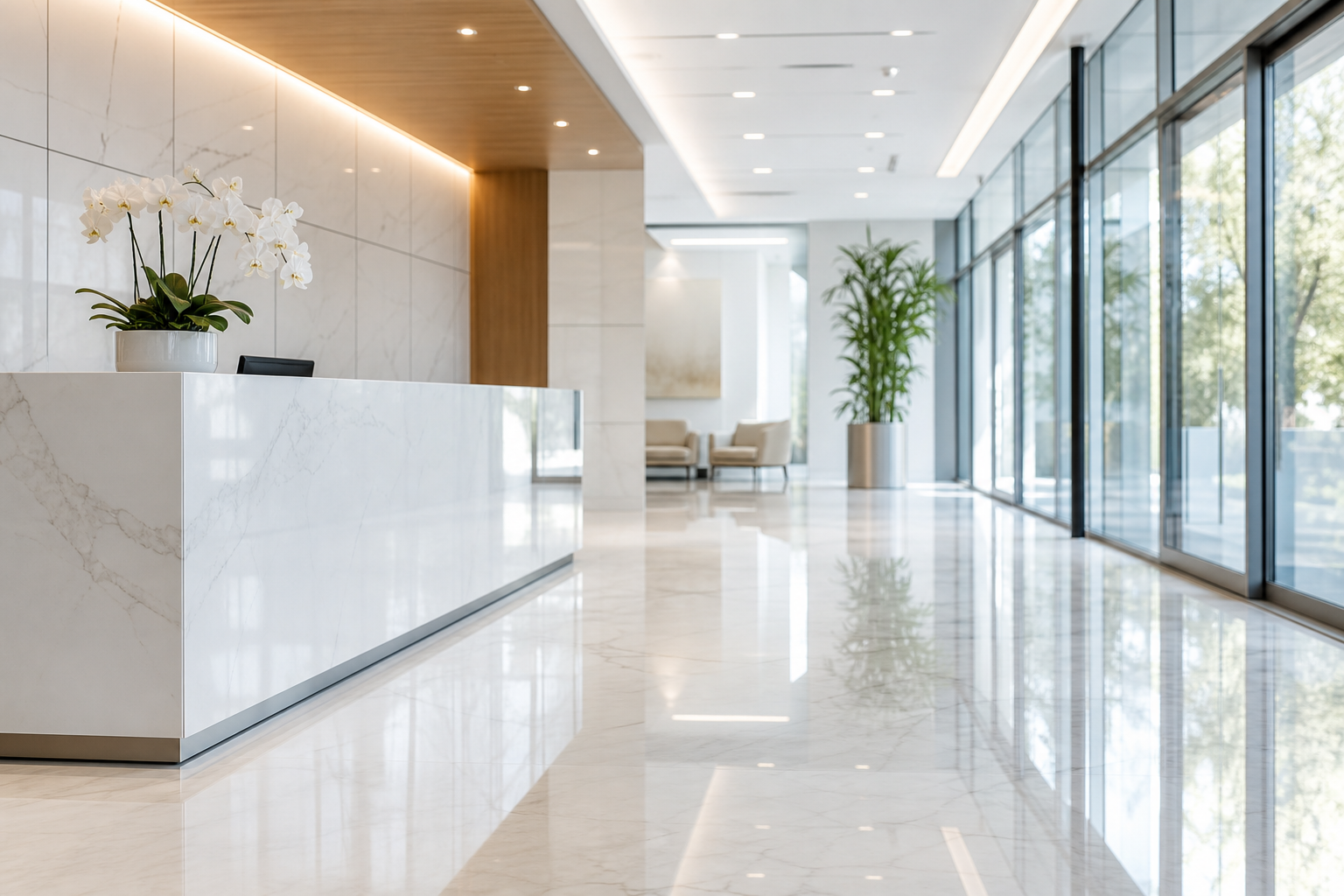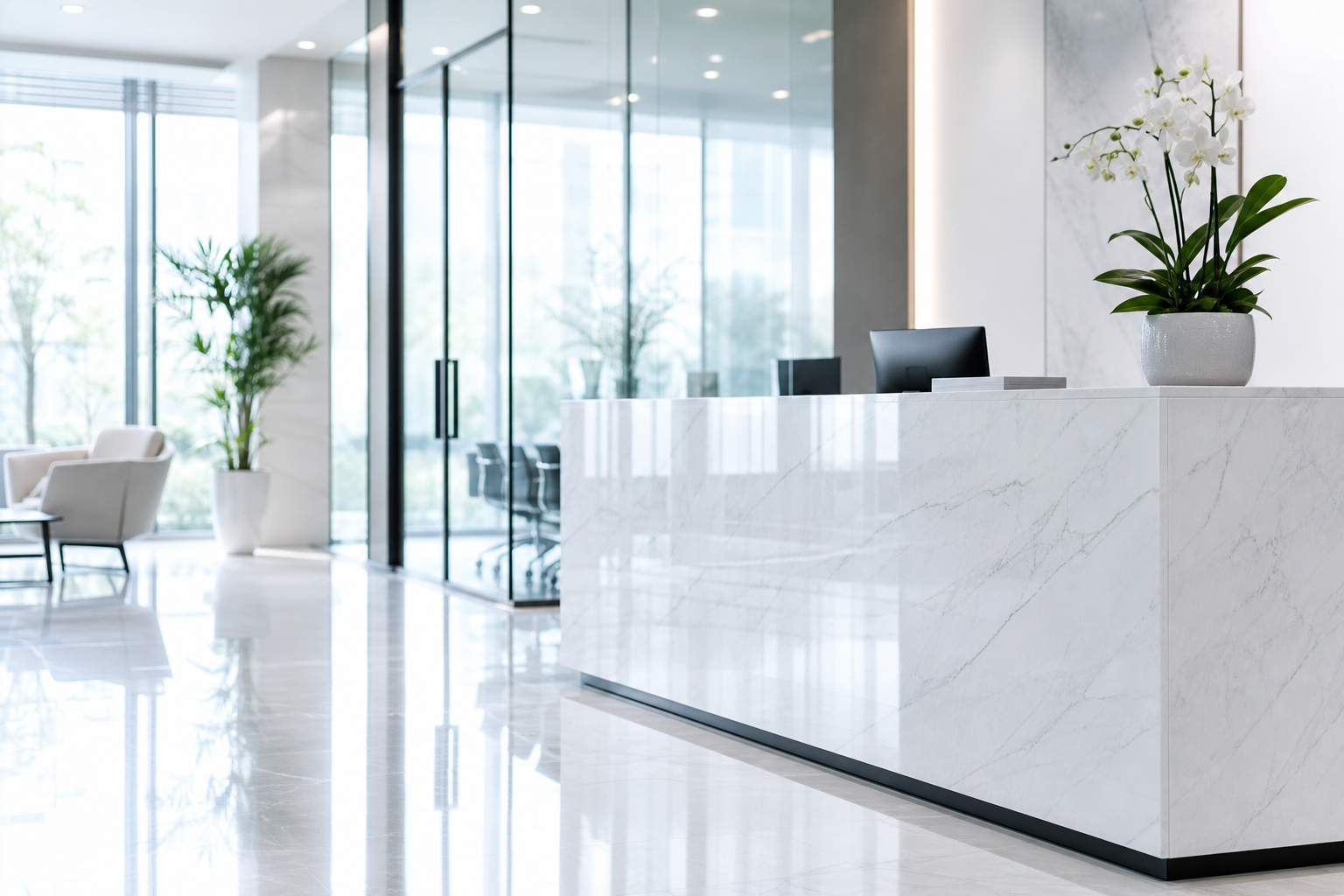
Your dealership’s showroom floor is the one part of the customer experience every visitor “reads” instantly—often before they speak to a salesperson or sit in a vehicle. High-gloss tile, polished concrete, epoxy, or luxury vinyl can amplify lighting, make inventory look sharper, and signal operational excellence. Conversely, dull finish, swirl marks, embedded grit, and black heel scuffs communicate neglect and can undermine confidence in the vehicles and the brand.
For facility managers and dealer principals, the challenge is that showroom floors take a daily beating: foot traffic, wheel loads, winter salt, rainwater, vehicle drip lines, and constant micro-abrasion from sand. The ROI is straightforward: a well-maintained floor protects the finish you’ve already paid for, reduces slip-and-fall exposure, and extends replacement cycles—while supporting the sales environment your marketing budget is working to create.
First Impressions Are Measurable—and Floors Drive Them
Customers make rapid judgments about quality and trust based on environmental cues, and facilities are a major part of that evaluation. Research frequently cited in services marketing and environmental psychology indicates people form first impressions within seconds, and those impressions influence how they interpret everything that follows. In a showroom, your floor is a dominant visual surface—reflectance, cleanliness, and uniformity directly affect perceived brightness and perceived value of the space.
The operational takeaway is to treat floor appearance as a controlled standard, not a “when we have time” task. Use a documented appearance benchmark (gloss level targets, visible soil thresholds, and edge/detail expectations) and align cleaning frequency to traffic patterns, weather, and promotions. When the floor is maintained to a consistent standard, it supports merchandising and reduces the need for costly, disruptive restorative projects.
- Implement a daily “open-ready” floor checklist (entrances, high-traffic lanes, around display vehicles, and customer seating areas).
- Use entry matting strategy (minimum 10–15 feet of walk-off coverage) to reduce tracked-in soil and finish abrasion.
- Schedule periodic burnishing/polishing and scrub-and-recoat cycles based on measured wear—not guesswork.
Safety, Liability, and Compliance: Clean Floors Reduce Risk
Auto showrooms combine smooth hard surfaces, wet-weather exposure, and constant movement—conditions that elevate slip risk if not managed. OSHA’s Walking-Working Surfaces standard (29 CFR 1910 Subpart D) requires employers to keep walking-working surfaces clean, orderly, and in a sanitary condition, and to address hazards such as wet or contaminated floors. Beyond regulatory expectations, a documented floor care program helps demonstrate due diligence if an incident occurs.
Cost efficiency shows up in reduced claims and fewer emergency responses. A professional program uses the right chemistry (neutral cleaners that won’t haze finishes), correct dilution control, and rapid-response spill protocols—especially near service write-up doors and entry vestibules. Pair that with visible caution procedures during wet mopping and a focus on traction management (matting, spot cleaning, and dry soil removal) to minimize downtime and protect customer and staff safety.
Modern Floor Care Technology Protects Finish—and Your Budget
Showroom floors fail aesthetically long before they fail structurally, usually because of micro-scratching and finish degradation from grit. The most cost-effective approach is controlling particulate soil and using equipment designed to remove soil without damaging the surface. HEPA-filtered commercial vacuums for perimeter detailing, microfiber flat mopping for daily soil capture, and auto-scrubbers with appropriate pads/brushes can dramatically reduce re-soiling and finish wear. Where applicable, burnishing with the correct pad and speed restores gloss without repeated stripping, and modern low-VOC floor finishes help maintain appearance while supporting indoor air quality expectations.
From an ROI standpoint, proactive maintenance typically costs far less than reactive restoration. Stripping and refinishing is labor-intensive, disruptive to sales operations, and can shorten floor life if done too frequently. A planned cycle—daily soil removal, frequent auto-scrubbing, and periodic scrub-and-recoat—extends the useful life of the finish layer and delays replacement. Facility managers also gain predictable budgeting, fewer after-hours emergencies, and a consistently “camera-ready” showroom for walk-ins, online content, and manufacturer visits.
Conclusion
Your showroom floor is not just a maintenance line item—it’s a high-visibility sales asset that influences trust, supports merchandising, and reduces risk. When the floor is bright, uniform, and slip-managed, the entire dealership looks more premium, better run, and more worthy of a major purchase decision.
If you want a showroom that sells before your team even says hello, partner with a professional commercial cleaning provider that can engineer a dealership-specific floor care program—matting strategy, daily maintenance, periodic restoration, and compliance-ready documentation. The result is lower long-term flooring costs, fewer safety exposures, and a consistently polished first impression that supports every deal you close.