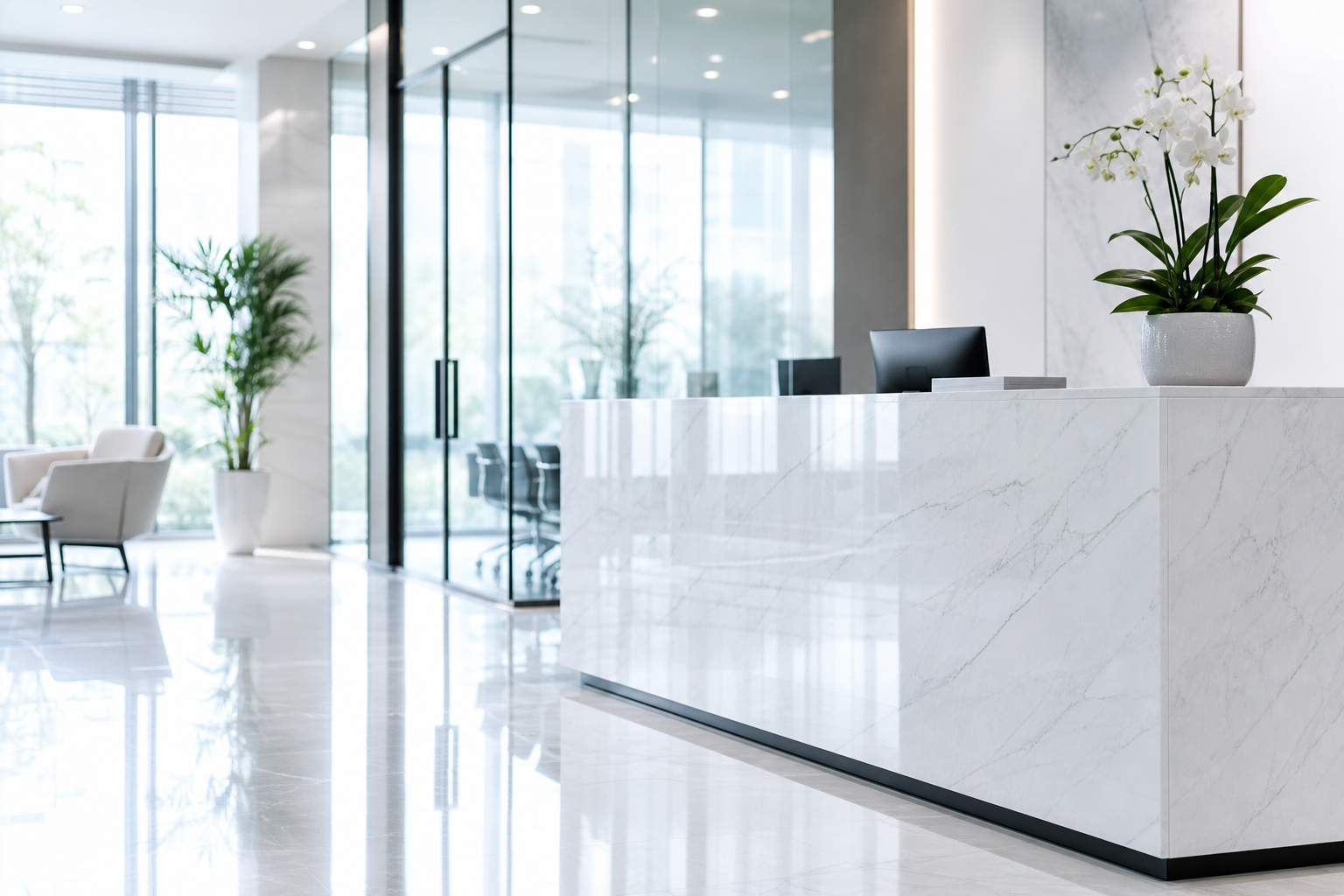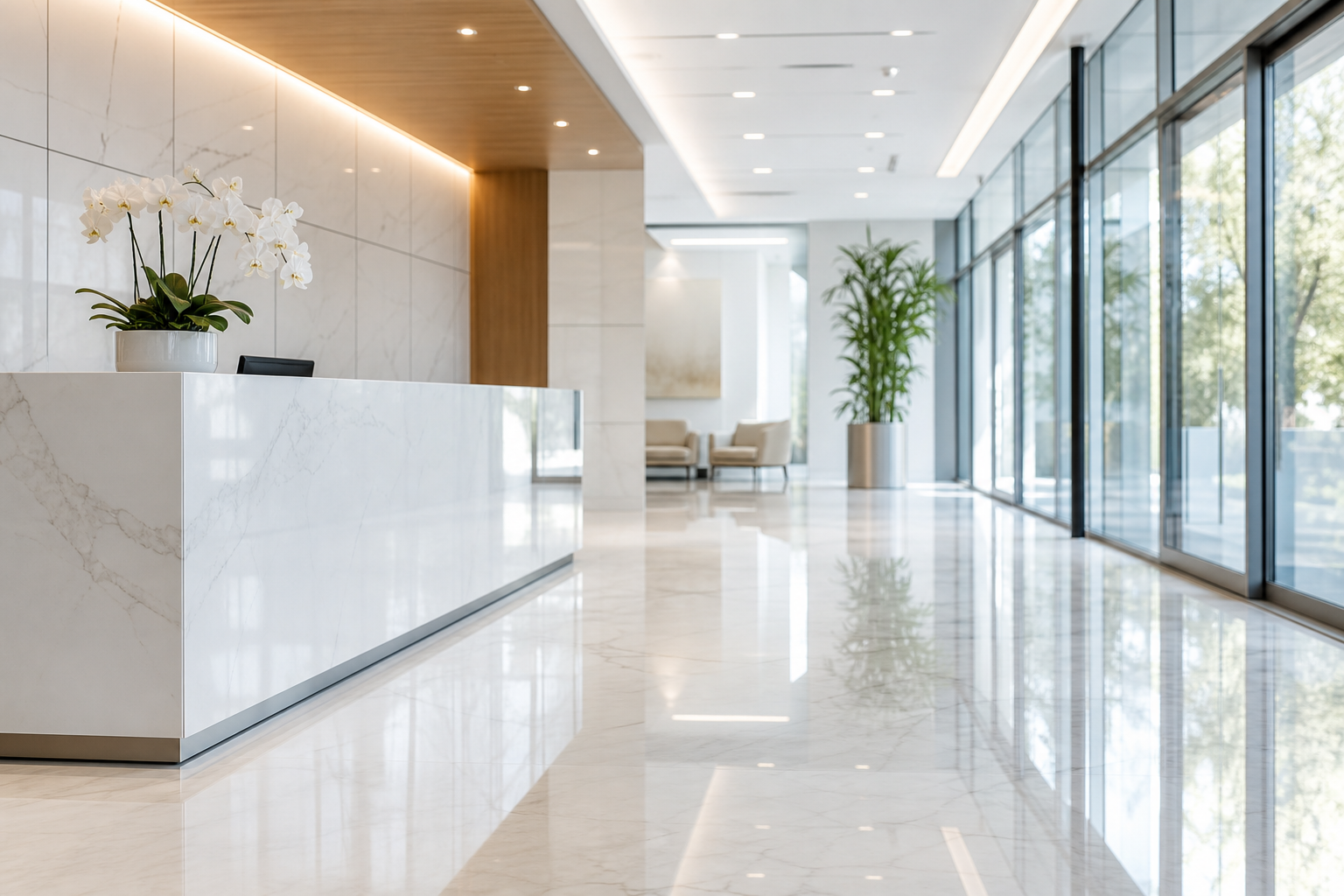
Your showroom floor is the largest “display” in your dealership—and it’s the first surface every prospect judges, consciously or not. Before a customer asks about pricing, warranties, or financing, they’ve already formed an impression based on what they see underfoot: gloss level, uniformity, scuffing, stains, and the overall sense of care. In a high-ticket, trust-based purchase like a vehicle, facility condition functions as a credibility signal; a spotless, well-maintained floor visually reinforces professionalism, quality standards, and attention to detail.
For owners and facility managers, the challenge is that showroom floors take constant abuse: tire marks, grit tracked in from the lot, winter salt, beverage spills, and high foot traffic—often under bright lighting that exaggerates every flaw. The ROI case is straightforward: disciplined floor care reduces slip-and-fall risk, protects expensive finishes, and supports the customer experience that drives close rates and CSI scores. It also lowers lifecycle costs by preventing premature replacement and minimizing reactive “emergency” cleaning before big weekends, OEM visits, or promotional events.
First Impressions Are Measurable: Clean Floors Influence Trust, Dwell Time, and Risk
Shoppers make rapid judgments about cleanliness and professionalism within seconds of entering a space, and the showroom floor occupies a large portion of their field of view—especially in open layouts with high-intensity lighting. From a risk standpoint, floor condition is also one of the most scrutinized elements in incident investigations. OSHA’s Walking-Working Surfaces standard (29 CFR 1910 Subpart D) requires workplaces to keep floors clean, orderly, and in a sanitary condition, and to address hazards like wet surfaces and poor housekeeping that contribute to slips, trips, and falls.
Slip-and-fall claims are among the most common—and costly—premises liability incidents for retail-facing facilities. According to NFSI, slips and falls account for over 1 million emergency department visits annually in the U.S., and floor contamination is a leading contributor. In a dealership environment where customers move from outdoors to indoors (often with moisture, de-icers, or grit on shoes), preventative floor-care controls—matting, rapid spot response, and proper finish maintenance—are not optional; they are core to loss prevention and brand protection.
- Implement a “clean-to-shine” program: daily dust mopping and auto-scrubbing (as appropriate to the flooring type) to remove abrasive soils that dull finish and create micro-scratches.
- Use commercial-grade entry matting (at least 10–15 feet of combined scraper/wiper coverage) to reduce tracked-in soil and moisture before it reaches the showroom.
- Standardize rapid-response spill protocols with clearly assigned ownership, signage, and the correct chemistry to prevent etching, staining, and slip hazards.
Flooring Systems, Finishes, and OEM Expectations: Protect the Asset, Not Just the Appearance
Showroom floors are commonly polished concrete, VCT/LVT, epoxy coatings, or porcelain tile—each with different maintenance needs and failure modes. Improper chemicals (wrong pH), aggressive pads/brushes, or inconsistent burnishing can permanently degrade gloss, create swirl marks, and shorten the life of the finish or coating. Polished concrete, for example, can lose clarity and reflectivity if abrasive soils aren’t controlled, while VCT can quickly yellow or blacken in traffic lanes when finish is under-maintained.
From a cost-efficiency standpoint, floor care is a lifecycle management decision. Preventative maintenance—routine soil removal, periodic scrub-and-recoat for finished floors, and scheduled polishing/burnishing where applicable—extends replacement cycles and reduces disruptive downtime. It also avoids the common hidden cost of “panic cleaning” before manufacturer audits, VIP events, or weekend promotions, which often requires premium labor rates and can still fall short if the underlying finish has been neglected for months.
Building a Dealership-Ready Floor Care Program: Standards, Technology, and ROI
A high-performing dealership floor program is built like any other operational system: defined standards, measurable outcomes, and the right tools. Industry best practice aligns with ISSA cleaning standards and documented SOPs that specify frequencies by zone (entry, showroom, F&I offices, service write-up), soil conditions, and flooring type. Technology also matters: modern auto-scrubbers with controlled solution flow, high-productivity microfiber systems, and low-VOC, floor-safe chemistries reduce labor hours while improving consistency. For indoor air quality and health considerations, many facilities adopt low-emission products consistent with green cleaning programs and LEED/GS-42-style criteria.
ROI typically comes from three buckets: labor optimization (fewer re-cleans and less “detail work” under bright lights), asset protection (longer finish/coating life and fewer restorations), and risk reduction (fewer incidents and stronger defensibility through documented inspections and maintenance logs). A practical way to quantify value is to compare annual preventative care costs against the avoided costs of one major restorative project, a premature floor replacement, or a single claim. When floor appearance is treated as a sales enablement tool—not a janitorial afterthought—dealerships usually see better readiness for high-traffic weekends, improved brand perception, and fewer operational fire drills.
Conclusion
Your showroom floor is your dealership’s first sales pitch: it signals quality, reinforces trust, reduces liability exposure, and protects one of your most visible facility assets. A consistent, flooring-specific maintenance program keeps the space photo-ready under harsh lighting, prevents wear in traffic lanes, and supports a safer customer and employee environment—without last-minute scrambling.
If you want showroom-ready results that hold up day after day, partner with a professional commercial cleaning team that understands dealership traffic patterns, flooring systems, and compliance-driven documentation. The right provider will deliver measurable outcomes—higher gloss retention, fewer incidents, longer floor life, and predictable costs—so your facility consistently looks as premium as the vehicles you sell.