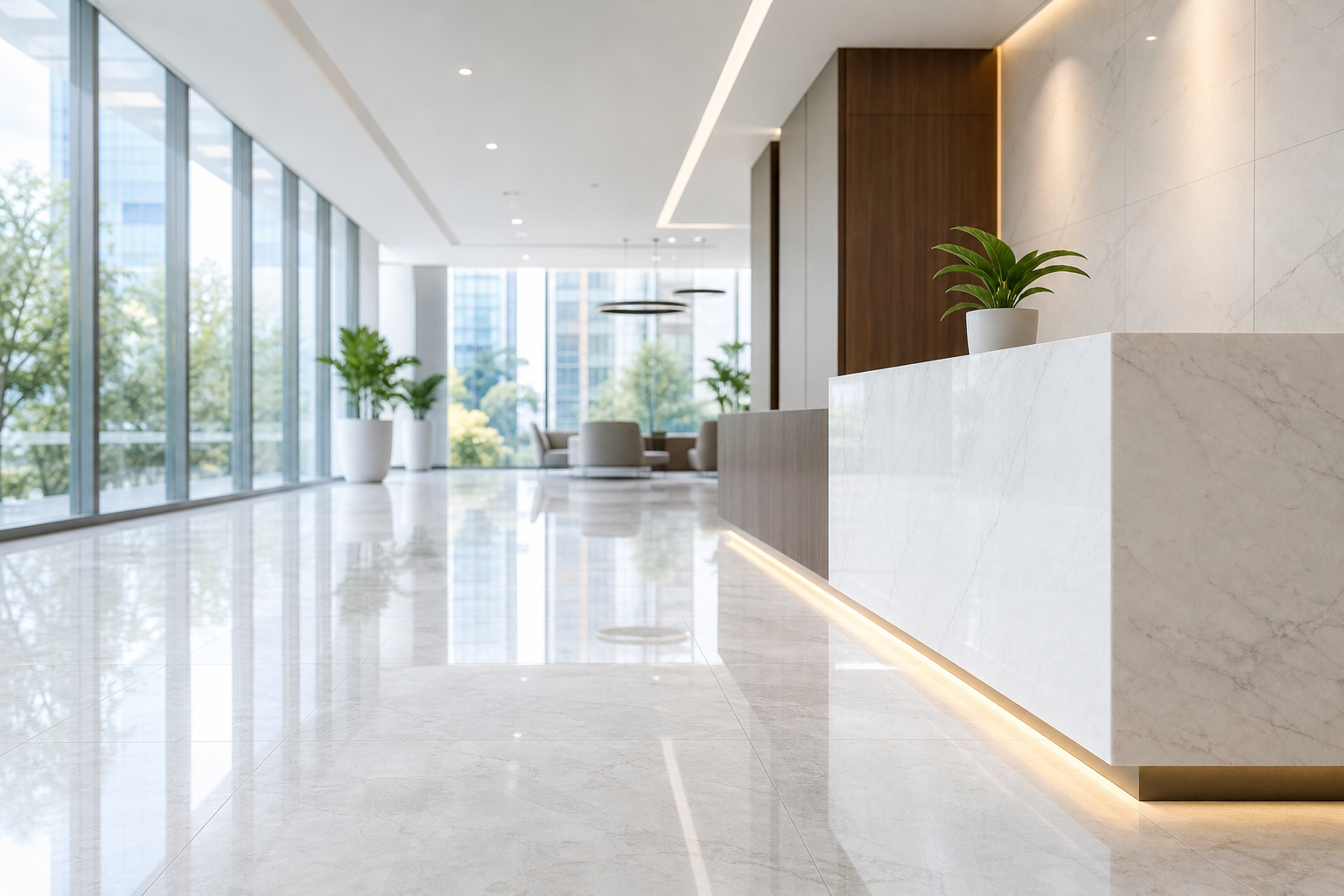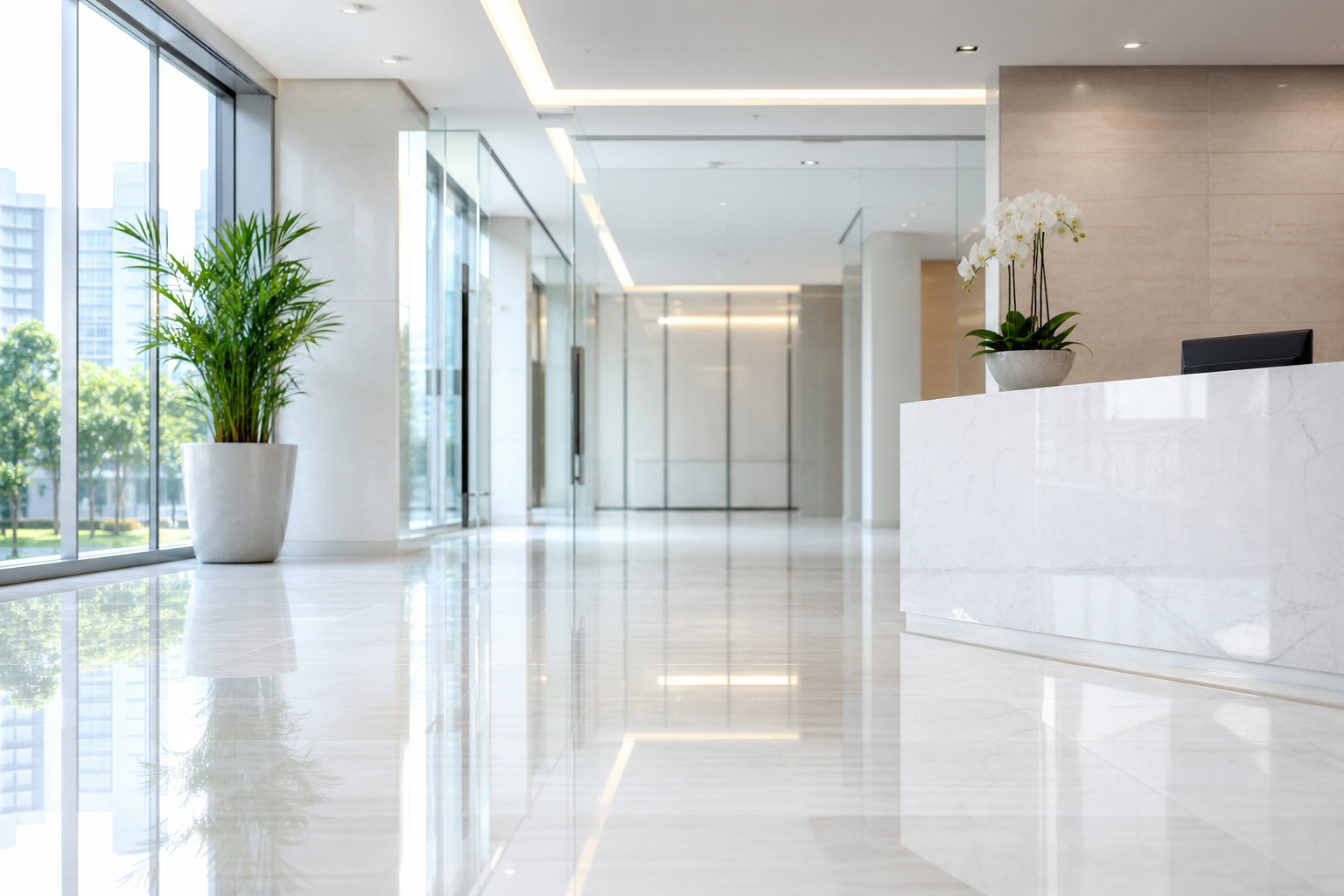
In automotive retail, customers make snap judgments long before they evaluate your inventory, pricing, or finance options—and your showroom floor is often the first “product” they experience. High-gloss, well-maintained floors signal precision, trust, and attention to detail; dull finishes, embedded soil, and visible scuffs quietly communicate neglect and can undermine brand standards in seconds.
For dealership owners and facility managers, the challenge is balancing appearance with durability under constant foot traffic, rolling loads, and seasonal grit. The ROI is real: cleaner, safer floors reduce slip-and-fall exposure, protect high-value finishes from premature replacement, and help your sales team present vehicles in the best possible light—literally—by improving reflectivity and overall merchandising impact.
First Impressions, Brand Trust, and the Psychology of “Clean”
Retail research consistently shows that environment shapes purchasing behavior: shoppers form first impressions within seconds, and cleanliness is a core driver of perceived quality and trust. In a dealership, where buyers are making high-consideration decisions, a spotless floor functions as non-verbal proof that your operation is professional, transparent, and detail-oriented—traits customers want in both the sales process and service department.
Actionably, “clean” must mean more than daily dust mopping. Dealership floors are exposed to fine grit, de-icing salts, tire residues, and oils that are not always visible until they dull the finish or create hazing under showroom lighting. A structured program that combines daily soil removal, periodic restorative maintenance, and correct chemistry for the floor type will preserve gloss, reduce long-term costs, and keep your showroom photo-ready for walk-ins and online listings.
- Implement a “soil containment” plan at entrances (high-performance walk-off matting and scheduled mat extraction) to prevent grit from acting like sandpaper on finishes.
- Use floor-type-specific chemistry (neutral cleaners for daily maintenance; manufacturer-approved degreasers for tire marks) to avoid etching, hazing, or finish breakdown.
- Schedule periodic burnishing and/or top-scrub & recoat cycles based on traffic counts—not calendar guesswork—to sustain shine and delay full stripping or resurfacing.
Risk Reduction: Slip Resistance, Liability, and Regulatory Alignment
Floors aren’t just a branding asset—they’re a risk surface. Wet weather, tracked-in salts, and overspray from detailing can increase slip potential, making consistent cleaning and drying protocols essential. OSHA’s Walking-Working Surfaces standards (29 CFR 1910 Subpart D) require employers to keep walking surfaces in a clean, orderly, and sanitary condition, and to address hazards such as wet or slippery floors—requirements that directly intersect with showroom operations, porter routines, and janitorial scope.
From a cost-efficiency standpoint, proactive floor care reduces incident likelihood and the operational disruption that follows—incident investigations, claims handling, staff downtime, and reputational damage. Practical controls include rapid response spill procedures, documented inspections, and using equipment that improves soil removal without over-wetting. Professional cleaning teams can also align procedures with modern slip resistance guidance (such as ANSI/NFSI B101 methods) and provide consistent documentation to support your risk management posture.
Modern Floor Care Technologies That Protect Your Finish and Your Budget
Today’s best-practice showroom floor programs rely on measured processes and modern equipment rather than “more chemical and more labor.” High-filtration dry soil removal (HEPA vacuums where appropriate), auto-scrubbers with controlled solution flow, and microfiber systems can materially reduce abrasive particulate—the primary cause of finish dulling and micro-scratching. In addition, low-moisture methods and fast-drying protocols help maintain safe conditions during business hours while protecting sensitive substrates and adhesives beneath LVT, tile, or polished concrete systems.
From an ROI perspective, the biggest savings typically come from extending the life of your floor system and reducing restorative events. A disciplined maintenance plan can delay expensive interventions such as stripping and refinishing VCT, diamond re-polishing concrete, or replacing damaged LVT—costs that escalate quickly when embedded grit and improper chemistry degrade surfaces. When a professional team evaluates your floor type, traffic patterns, and lighting, they can specify a program that maximizes gloss and longevity while minimizing downtime and labor variability.
Conclusion
Your showroom floor is not background—it’s your dealership’s first sales pitch. It shapes trust, amplifies vehicle presentation, supports safety compliance, and directly influences how customers interpret your brand before a single word is spoken. When floors are maintained with the right processes, chemistry, and technology, they become a durable asset that reinforces premium value and operational excellence.
If you want a showroom that consistently looks “new car ready,” reduces slip-and-fall exposure, and lowers long-term floor restoration and replacement costs, partner with a professional commercial cleaning service. A specialized team will audit your surfaces, build a traffic-based maintenance plan, and deliver measurable results—protecting your brand image while maximizing the ROI of every square foot of your facility.