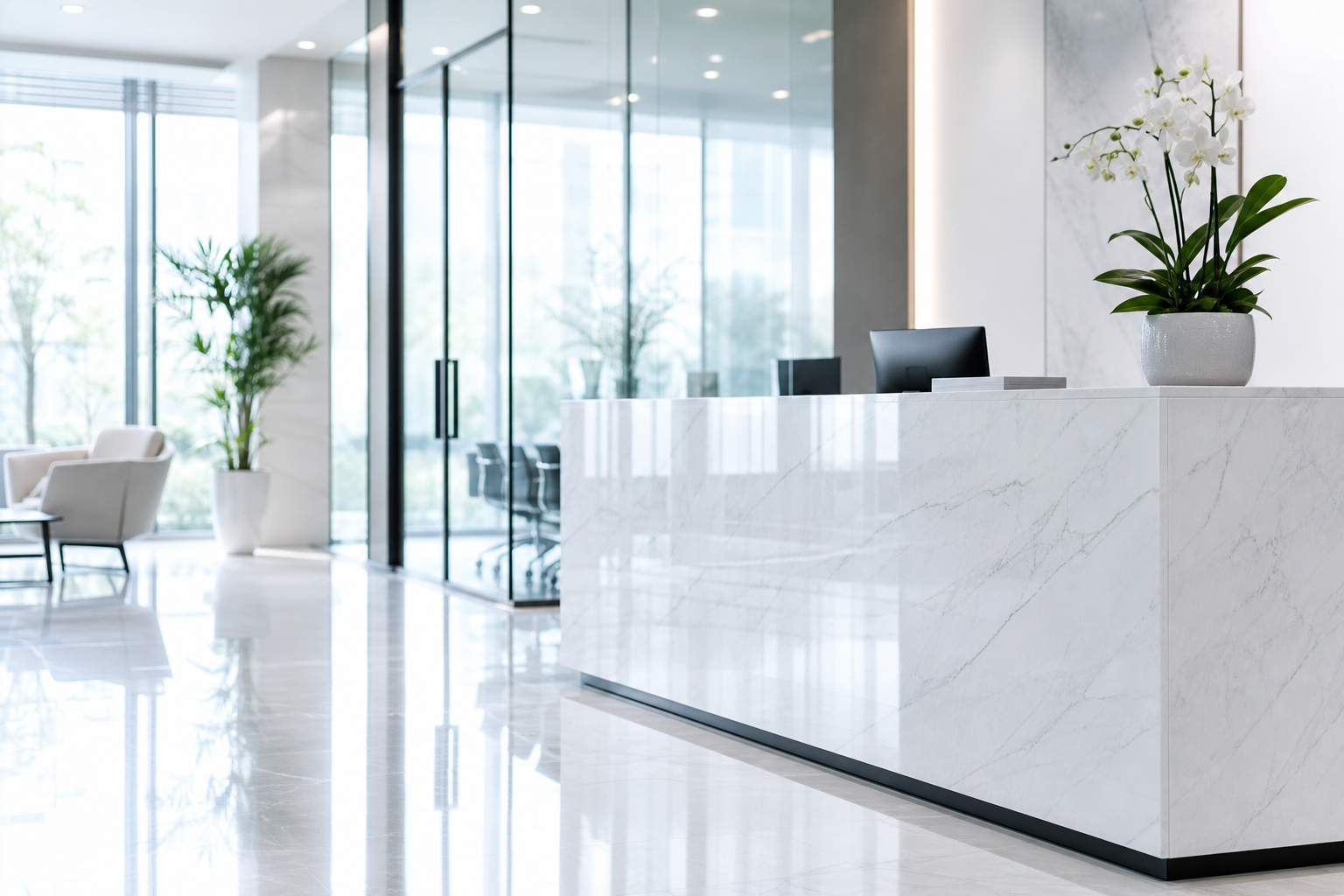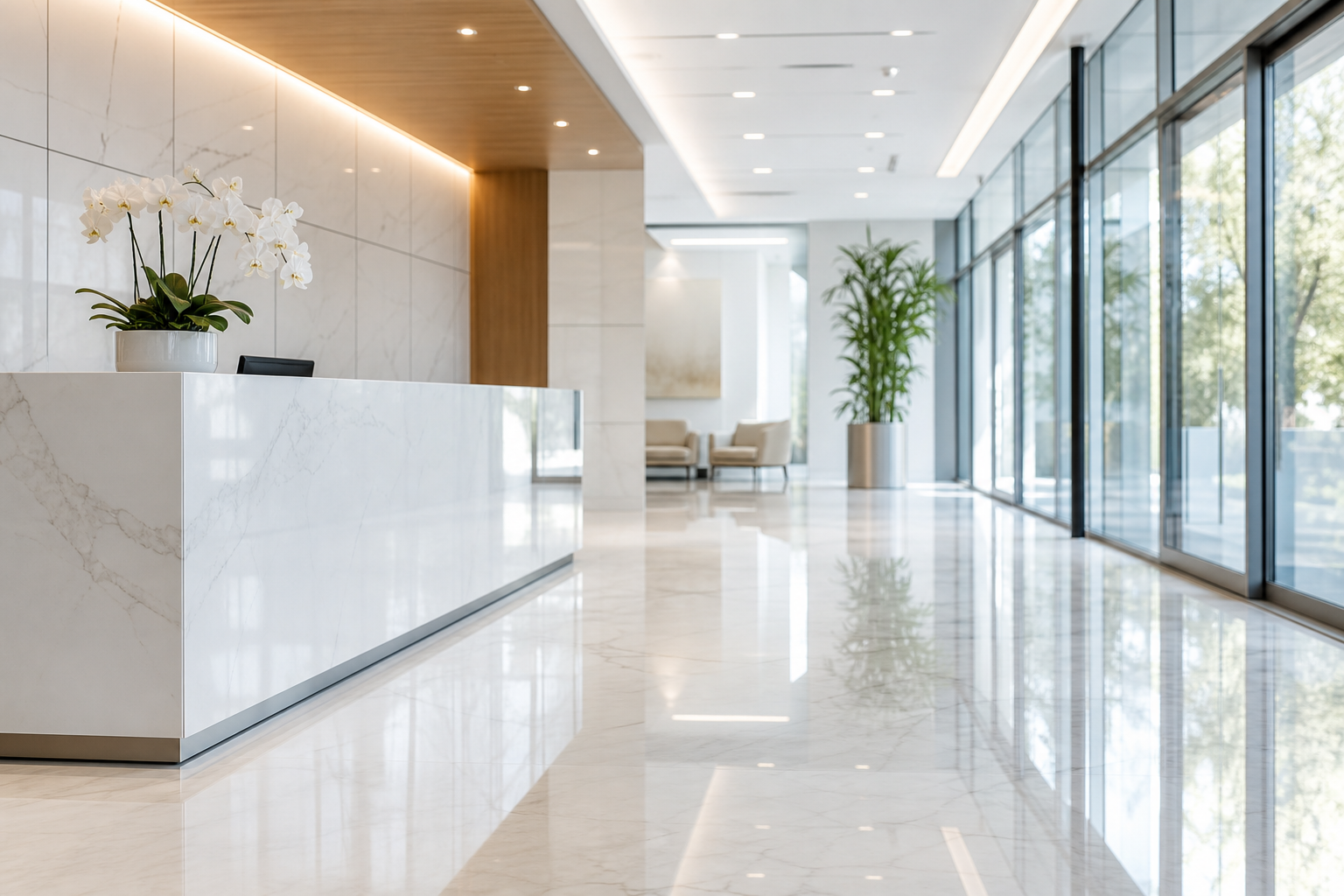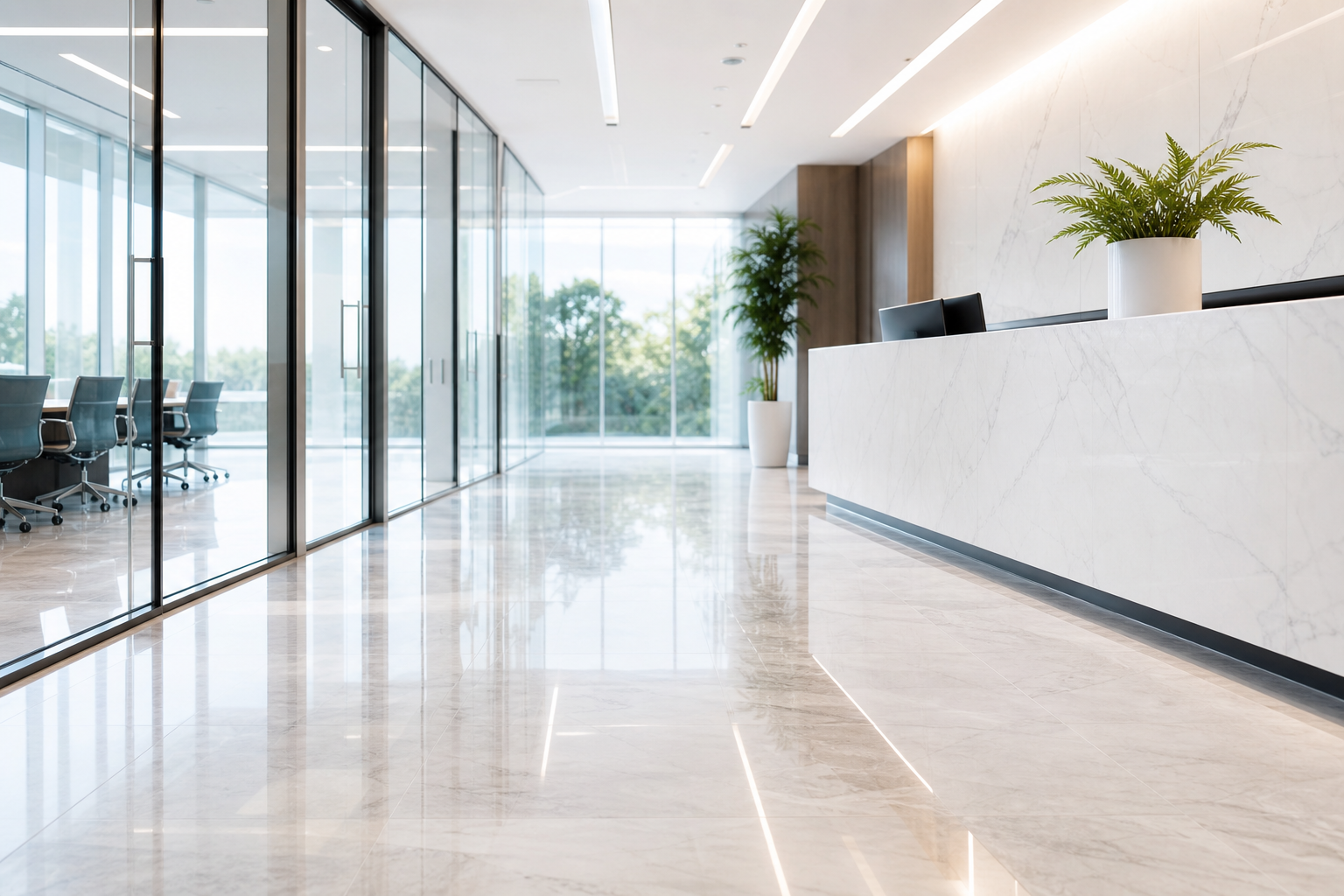
In automotive retail, your showroom floor is not “just” a surface—it’s a high-visibility asset that shapes customer perception before a salesperson ever says hello. Studies on first impressions consistently show that people form rapid judgments within seconds of entering a space, and in a dealership environment those judgments translate directly into trust, perceived vehicle quality, and willingness to engage. The floor is the largest continuous visual element in the showroom; if it’s dull, stained, hazy, or scuffed, it quietly signals neglect—regardless of how polished the inventory is.
Dealership operators also face a unique operational reality: constant foot traffic, rolling loads from vehicles and display stands, winter salt and grit, tire plasticizers, and frequent spot-cleaning that can leave residues and “cleaning lanes.” The result is a costly cycle of premature wear, higher slip-and-fall exposure, and more labor hours spent reworking preventable issues. When you treat showroom floor care as a sales-support function—with measurable standards, documented processes, and the right technologies—you reduce long-term restoration costs while improving customer experience and protecting revenue.
Your Floor Is a Visual Trust Signal (and a Brand Standard)
Consumers associate cleanliness with competence and reliability—two traits that strongly influence big-ticket purchasing decisions. In practice, a high-gloss, uniform, well-maintained showroom floor elevates perceived vehicle condition, reinforces premium branding, and reduces visual distractions that pull attention away from the cars. Conversely, etched stains, burnished swirl marks, and patchy shine communicate inconsistent maintenance and can create doubts about the dealership’s overall attention to detail.
To manage this strategically, align floor appearance with measurable criteria rather than subjective “looks good.” Use a defined inspection routine (opening walk-through, mid-day spot checks, closing review), assign ownership, and standardize products and equipment to prevent chemical incompatibility (a leading cause of haze and rapid re-soiling). Incorporate scheduled deep-cleaning and restorative maintenance based on traffic patterns, seasonality, and floor type (polished concrete, terrazzo, VCT/LVT, epoxy, or urethane systems).
- Implement a “zone plan” (entry, showroom, F&I, service write-up) with different cleaning frequencies based on traffic and soil load.
- Use walk-off matting systems sized to capture soil and moisture at entrances; extending mat coverage is one of the lowest-cost ways to reduce abrasive grit that scratches finishes.
- Standardize approved chemicals and dilution control to prevent residue, haze, and finish degradation—especially important on polished concrete and coated surfaces.
Safety, Liability, and Compliance: Floors Are a Risk Management Priority
Showroom floors also carry direct safety and compliance implications. Slip-and-fall incidents remain one of the most common and expensive liability exposures in retail environments. OSHA’s Walking-Working Surfaces standard (29 CFR 1910 Subpart D) requires employers to keep walking-working surfaces clean, orderly, and in a sanitary condition, and to address hazards such as spills and slippery conditions. Beyond regulatory expectations, a documented floor-care program supports defensibility if an incident occurs—especially when paired with routine inspections and corrective-action logs.
Operationally, the best safety outcomes come from pairing the right cleaning methods with the right floor chemistry and drying times. Overuse of “high-gloss” products, incorrect neutral cleaners, or improper auto-scrubber settings can leave a slick film that increases risk. Professional programs leverage microfiber dust control, autoscrubbing with appropriate pads/brushes, and controlled restoration (scrub-and-recoat, diamond polishing, or topical guards) to maintain traction while preserving appearance. This approach reduces unplanned shutdowns, protects staff productivity, and minimizes claims risk—delivering real cost-efficiency that goes beyond aesthetics.
Modern Floor Care Technology Delivers Measurable ROI
Dealerships that rely solely on reactive mopping and occasional “big cleans” typically pay more over time through accelerated wear, frequent emergency restoration, and higher labor costs. Modern best practices emphasize preventive maintenance with mechanized equipment and objective process control. For example, auto-scrubbers with consistent solution control and recovery improve soil removal versus manual mopping and reduce re-deposition. High-filtration vacuums and microfiber systems capture fine particulates that act like sandpaper on glossy floors. Where appropriate, low-VOC, fast-cure coatings or guards can extend the time between restorative cycles—especially in high-traffic pathways.
From an ROI standpoint, the goal is to reduce total cost of ownership (TCO): fewer labor hours spent reworking streaks and haze, fewer burnishing sessions to “chase shine,” and fewer costly strip/finish or grind-and-polish interventions. A structured program also protects capex by extending floor life—postponing replacement or major restoration. Many facility teams find that outsourcing to a professional commercial cleaning partner improves consistency, reduces chemical waste through dilution control, and provides access to specialized equipment (autoscrubbers, burnishers, diamond tooling, slip-testing protocols) without owning and maintaining it in-house.
Conclusion
Your showroom floor is your dealership’s first sales pitch because it sets the emotional tone—clean, controlled, premium, and trustworthy—or it undermines it with visible wear and inconsistency. When floor care is managed as a standard-driven program that balances appearance, safety, and surface longevity, you reduce liability exposure, protect your facility investment, and create a customer experience that supports higher confidence and smoother sales conversations.
If you want a showroom that consistently looks “delivery-day ready” without overspending on labor or emergency restoration, partner with a professional commercial cleaning team that understands dealership traffic patterns, surface-specific chemistry, OSHA-aligned safety practices, and modern maintenance technology. A well-designed floor-care plan pays for itself by extending floor life, reducing slip risk, and keeping your brand presentation flawless—every day, at the moment it matters most.